Description
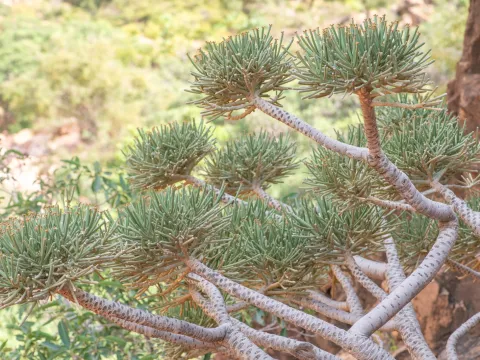
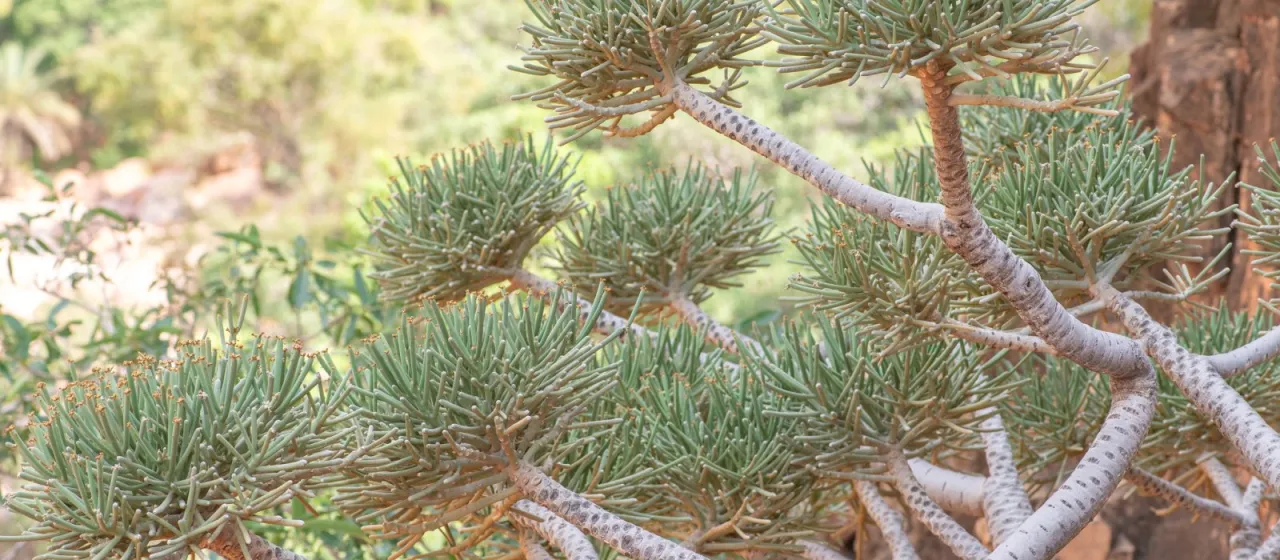
Tree Euphorbia (Euphorbia arbuscula) is a distinctive species of succulent plant belonging to the Euphorbiaceae family. As the name implies, it develops a robust, tree-like structure, making it one of the most visually striking representatives of the Euphorbia genus. Its morphology allows it to dominate arid environments by efficiently managing water storage within its succulent stems.
The plant originates from the island of Socotra, where it thrives in harsh, rocky landscapes. Its natural distribution is tied to unique climatic zones characterized by high heat and minimal seasonal rainfall. This evolutionary background has equipped Euphorbia arbuscula with an exceptional resilience to drought, making it an interesting candidate for xeriscaping and dry-climate agricultural projects.
Botanically, the species is defined by its ability to store water and its specialized secondary metabolites, including the characteristic milky latex. This substance serves as a potent chemical defense against herbivory and pathogens. The plant exhibits slow growth rates, focusing energy on building structural integrity rather than rapid biomass production, which is a common survival strategy in its native habitat.
Cultivation requirements for this species are specific and non-negotiable for long-term health. It demands full sun exposure to maintain its characteristic structure and a gritty, well-draining soil mix to prevent root rot. Watering should be infrequent, following the seasonal cycle of growth; during the winter dormancy period, irrigation should be strictly limited or entirely suspended to mimic its natural conditions.
The main economic use of Euphorbia arbuscula is in the ornamental trade, where it is highly prized for its sculptural qualities in landscape design. Beyond its aesthetic value, the species is studied for its unique survival mechanisms under extreme environmental stress. Pests such as mealybugs can occasionally affect the plant, but these are generally manageable through standard horticultural practices if caught early.
- Light requirement: Full sun.
- Soil texture: Highly porous and sandy.
- Growth rate: Slow.
- Propagation: Stem cuttings (with care to handle latex).
Photo gallery