Description
Euphorbia atoto is a perennial herbaceous plant belonging to the large and diverse Euphorbiaceae family. It is a specialized species that has evolved to thrive in the harsh environments of tropical coastal regions, making it a distinct example of botanical adaptation to salt-stressed habitats.
The native range of this species spans across the coastal areas of tropical and subtropical Asia, reaching into the Pacific Islands and parts of Australia. It is primarily found inhabiting sandy beaches and sand dunes, where it acts as a primary colonizer helping to stabilize shifting sands against wind and water erosion.
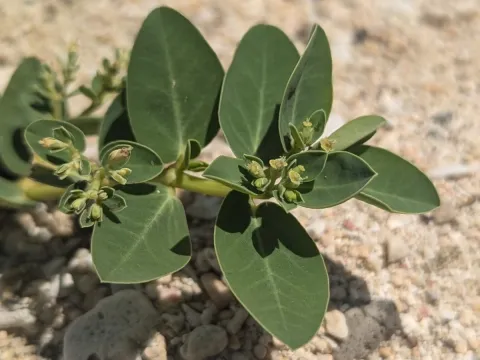
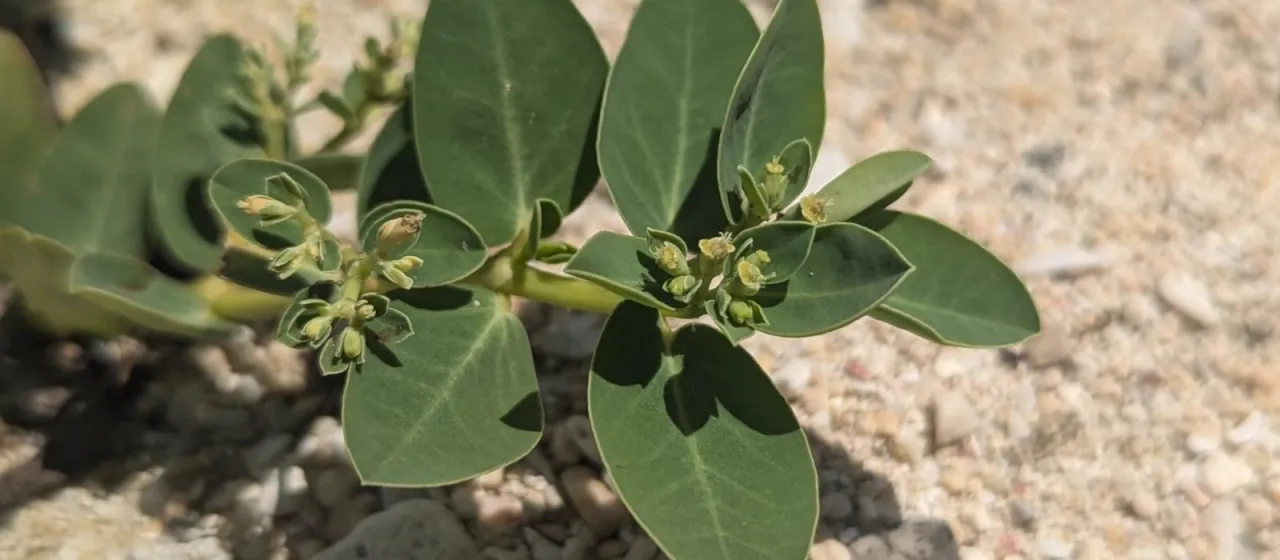
Botanically, Euphorbia atoto features fleshy, glabrous stems and leaves designed for succulent water retention. Like many other members of the genus, it produces a milky latex that acts as a deterrent against herbivores. This physiological trait is essential for its survival in nutrient-poor, exposed environments where plant resources are precious.
Cultivation requirements for this species are strict, focusing on excellent drainage and intense sunlight. In an agricultural or environmental management context, the soil must be sandy and well-aerated, as the plant is highly susceptible to root rot if moisture remains trapped around the roots. It requires minimal fertilization and thrives in conditions that would be unsuitable for most conventional crops.
The primary utility of Euphorbia atoto lies in its ecological role in coastal land management and dune stabilization. While it has historical ties to traditional medicine, its modern relevance is mostly linked to conservation efforts and the restoration of degraded coastal ecosystems where its presence helps prevent further erosion and supports local biodiversity.
- High tolerance to salinity and salt spray.
- Requirement for full sun exposure.
- Strict dependency on well-drained, sandy soils.
- Defense mechanism via toxic latex in stems and foliage.
Photo gallery