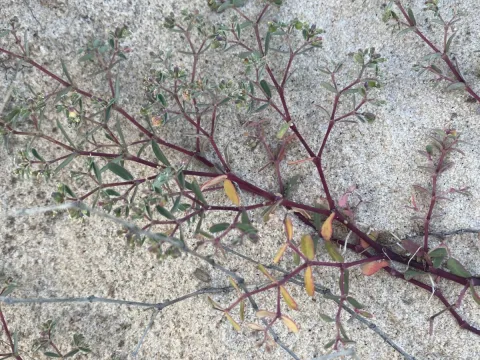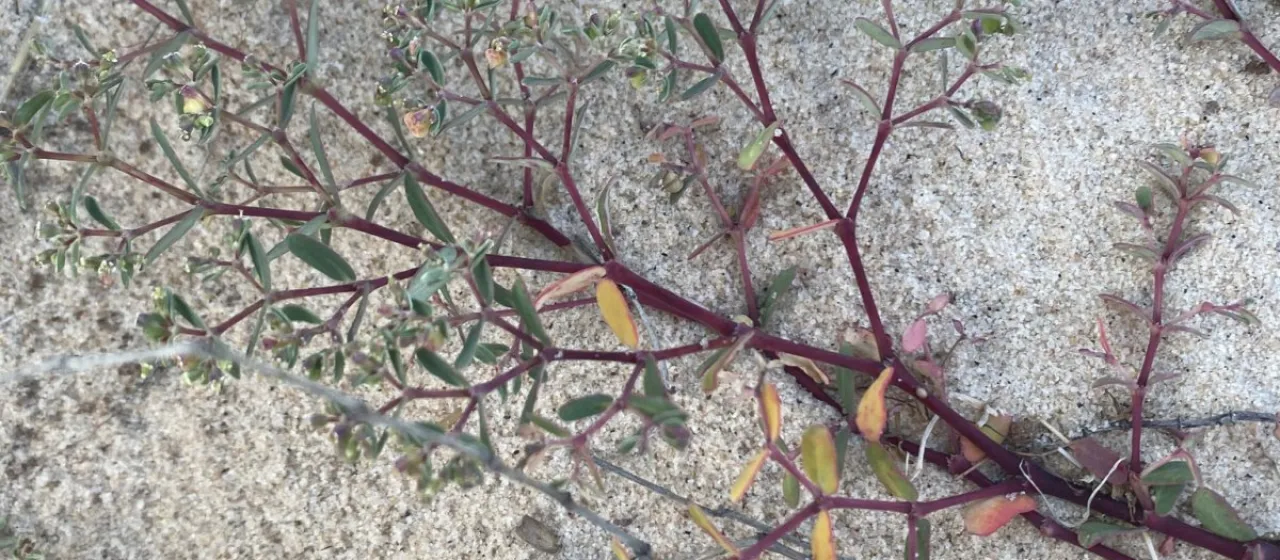
Description
Euphorbia bahiensis is a perennial succulent plant belonging to the diverse and widely studied Euphorbiaceae family. It is recognized for its specialized adaptation to arid environments, characterized by a latex-rich sap stored within its fleshy stems and leaves, which serves as a chemical defense mechanism against herbivores.
The plant originates from the tropical and subtropical regions of South America, specifically adapted to the climate of Brazil. Its natural habitat consists primarily of sandy, rocky outcrops and xeric scrublands where water availability is sporadic. Due to these evolutionary origins, the plant has developed a high tolerance for drought and intense light conditions.
Botanically, it features a low-growing structure, often branching from the base. The leaves are typically succulent, designed to minimize transpirational loss. The reproductive system is centered around small, inconspicuous flowers clustered into cyathia, which are the hallmark of the Euphorbia genus. The root system is resilient and capable of exploiting limited soil moisture effectively.
Agricultural requirements for Euphorbia bahiensis focus on mimicry of its natural desert environment. Well-draining, mineral-based soil mixes are essential to prevent root rot, which is the most frequent issue in non-native settings. It requires a significant amount of solar radiation to maintain its compact growth form and prevent etiolation. Fertilization should be kept to a minimum to avoid promoting weak, succulent growth.
Management of the culture is primarily restricted to ornamental horticulture and botanical research. In terms of phytosanitary health, the plant is susceptible to common greenhouse pests such as scale insects and mealybugs. Pathological issues are almost exclusively related to improper irrigation management, where excess water leads to sudden physiological collapse and fungal decay of the primary vascular tissues.
Photo gallery