Description
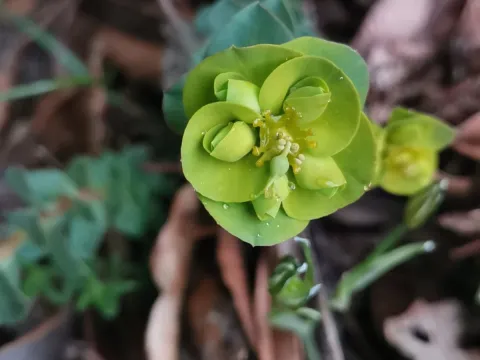
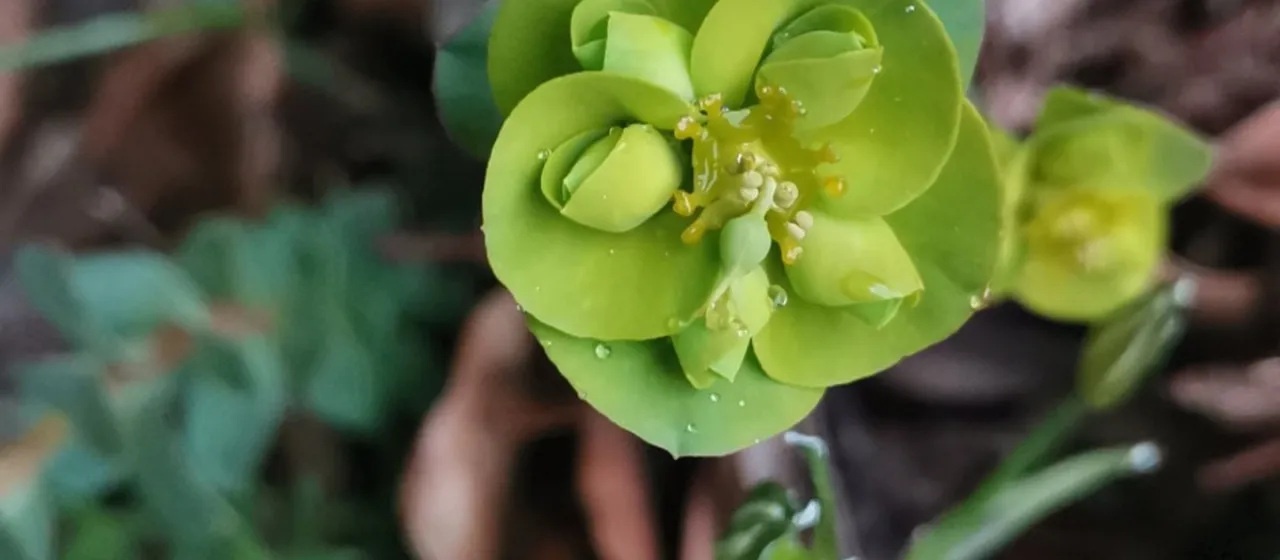
Barrelier's spurge (Euphorbia barrelieri) is a perennial herbaceous plant belonging to the Euphorbiaceae family. Like other members of the genus Euphorbia, this plant produces a milky latex that is toxic and serves as a chemical defense mechanism against herbivores. It is a highly specialized species that has adapted to thrive in extreme environmental conditions.
The native distribution of this plant is primarily focused in the Mediterranean region. It is typically found in dry, stony habitats, limestone cliffs, and open rocky slopes. Its natural range reflects a strong preference for high-light environments and regions where moisture availability is limited during the peak summer months, showcasing its xerophytic nature.
Botanically, Barrelier's spurge features stems that support simple leaves and complex, modified inflorescences known as cyathia. The plant's root system is robust, allowing it to anchor securely in shallow, rocky soils and reach for moisture that is inaccessible to many other species. The overall architecture of the plant is designed for efficient water usage and transpiration control.
Agricultural and horticultural requirements for this species are specific: it demands excellent drainage and a substrate rich in mineral content rather than organic matter. When cultivated in rock gardens or xeriscaping, it requires full sun exposure and minimal watering once established. Over-fertilization should be strictly avoided to maintain the plant's natural compact and resilient growth habit.
- Adaptation to rocky, nutrient-poor, and alkaline soils.
- High tolerance to intense solar radiation and drought.
- Risk of fungal infections in high-humidity environments.
- Requirement for significant inorganic drainage material.
In terms of хозяйственное (economic) use, this plant is primarily utilized as a botanical curiosity or a specimen plant for specialized drought-tolerant landscapes. While it lacks widespread agricultural production, it is studied for its chemical compounds and its evolutionary mechanisms for stress resistance. Pests such as aphids may occasionally affect it, but general maintenance remains low if environmental requirements are met.
Photo gallery