Description
Blue Euphorbia (Euphorbia caerulescens) is a perennial succulent plant belonging to the Euphorbiaceae family. It is widely recognized for its striking columnar structure, which often leads to confusion with cacti. However, as a member of the Euphorbia genus, it contains a specialized milky latex sap that is toxic and serves as a natural defense mechanism against herbivores.
Originating from the arid regions of South Africa, specifically the Cape Province, this species is highly adapted to harsh environments. Its natural habitat consists of rocky slopes and semi-desert areas characterized by high solar radiation and low precipitation. Consequently, the plant has evolved physiological traits that enable it to thrive in dry conditions where few other plants could survive.
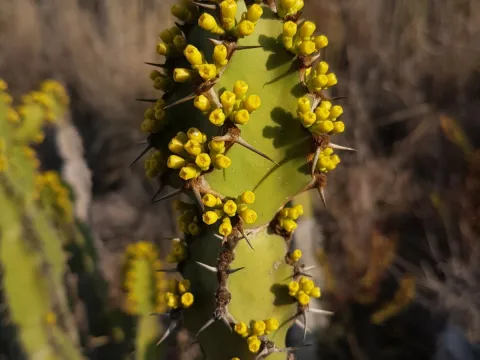
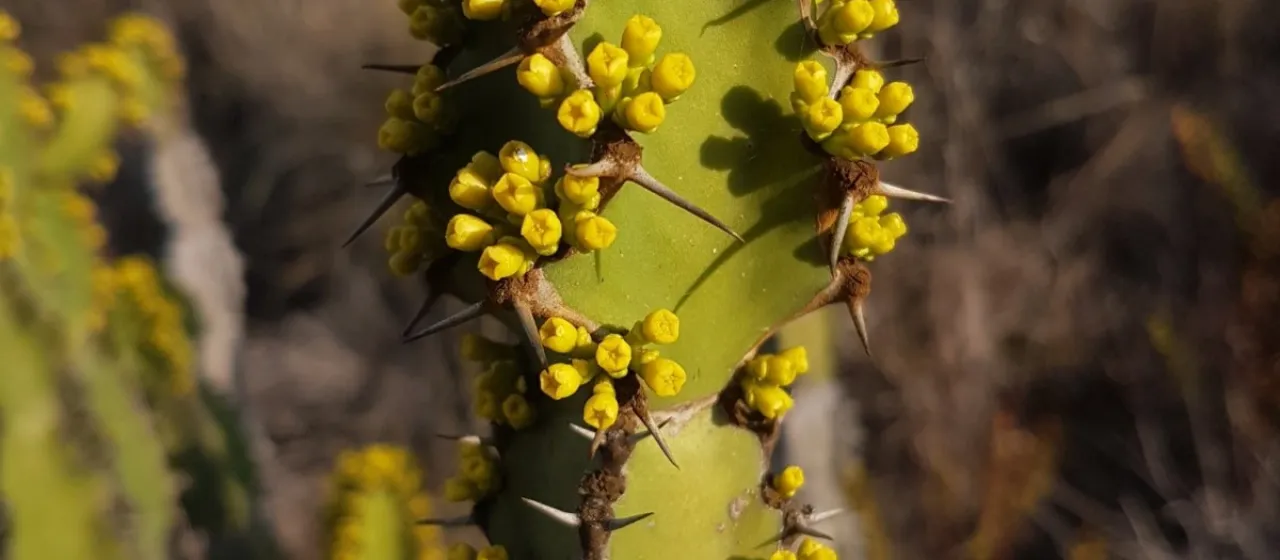
The botanical structure of the plant features fleshy, ribbed stems with a characteristic glaucous blue hue. These stems are equipped with small spines along the ribs, providing protection and reducing water loss. During the flowering stage, the plant produces small, yellow cyathia. Its growth habit is naturally shrubby, eventually forming dense, clumped colonies in its native environment.
Agronomic requirements for cultivating Euphorbia caerulescens center on mimicking its natural desert environment. The soil must be exceptionally porous and well-draining, such as a mix of sand, pumice, and minimal organic matter. In greenhouse conditions, careful monitoring of humidity is essential, as the plant is highly susceptible to root rot in poorly drained substrates. It thrives in full sunlight, which is necessary to maintain its distinct blue coloration.
While the plant does not have significant large-scale agricultural utility, it holds value in xeriscaping, ornamental horticulture, and botanical research regarding succulent adaptation. Pests such as mealybugs can pose a threat to the plant's health, particularly in stagnant air conditions. Proper maintenance involves a distinct seasonal cycle, with regular watering restricted to the growing season and complete drought during the winter dormancy period.
- Light: Requires high intensity full sunlight.
- Soil: Mineral-based, highly permeable substrate.
- Propagation: Stem cuttings must be calloused before planting.
- Safety Warning: Avoid contact with the milky sap as it is an irritant.
Photo gallery