Description
The Canary Island Spurge (Euphorbia canariensis) is a distinctive, large succulent shrub that belongs to the Euphorbiaceae family. It is widely recognized for its impressive columnar growth, which often reaches several meters in height, resembling a massive, many-branched candelabrum.
Native to the Canary Islands, this plant is naturally adapted to arid environments, rocky coastal cliffs, and slopes. It thrives in regions with subtropical climates, where sunlight is abundant and annual rainfall is very low. Its natural habitat dictates its physiological resilience to heat and drought.
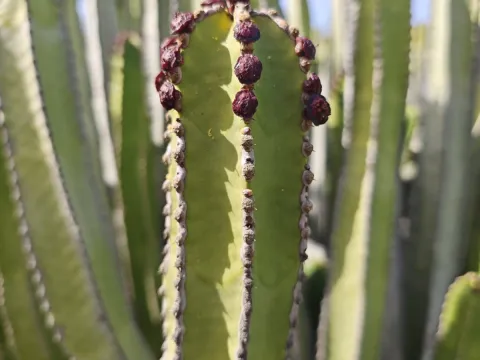
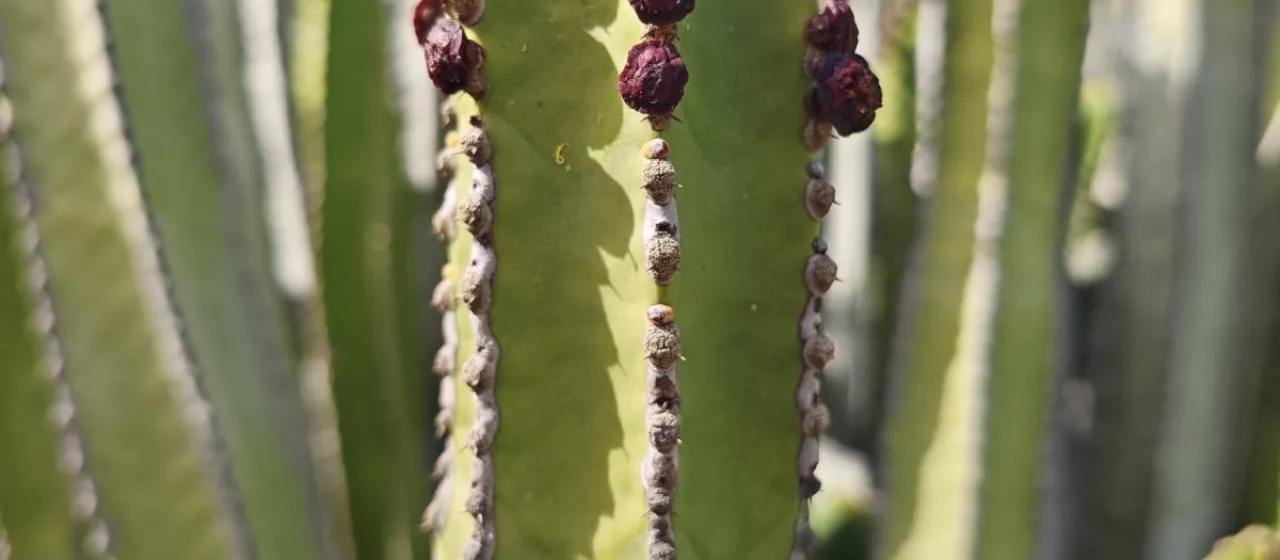
Botanically, the species is characterized by thick, succulent, four- to five-angled stems armed with sharp spines along the ridges. The leaves are essentially reduced to tiny scales, an evolutionary strategy to minimize water loss through transpiration. During the blooming season, it produces small, reddish-purple cyathia that appear at the stem tips.
Successful cultivation requires specific environmental conditions. It demands a gritty, well-draining mineral soil and a location with full, direct sun exposure. Key agronomic practices include:
- Ensuring excellent soil aeration and drainage to prevent root rot.
- Applying moderate watering strictly during the active growth phase.
- Providing complete drought during winter months to mimic the dormant season.
- Protecting the plant from frost and high humidity levels.
The plant is primarily utilized in xeriscaping and as a specimen plant in warm-climate gardens. As with many members of the Euphorbia genus, it contains a milky, caustic latex that serves as a defense against herbivores. Gardeners should handle the plant with care, as the sap is known to cause severe skin and eye irritation.
Photo gallery