Description
Euphorbia capitulata is a perennial herbaceous plant belonging to the Euphorbiaceae family. In an agricultural context, it is recognized as a hardy species capable of thriving in challenging environmental conditions, often studied for its potential in specialized pharmacological production and xeriscaping.
Originating from the mountainous regions of Southeastern Europe, this plant has adapted to rocky, arid habitats. Its natural distribution range includes limestone slopes and gravelly meadows, which dictates its preference for well-aerated substrates and excellent drainage. It is well-suited for cultivation in temperate climates that feature hot, dry summers.
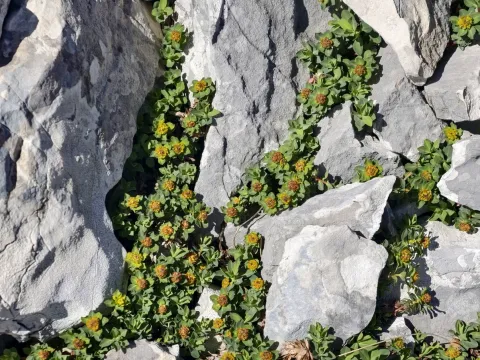
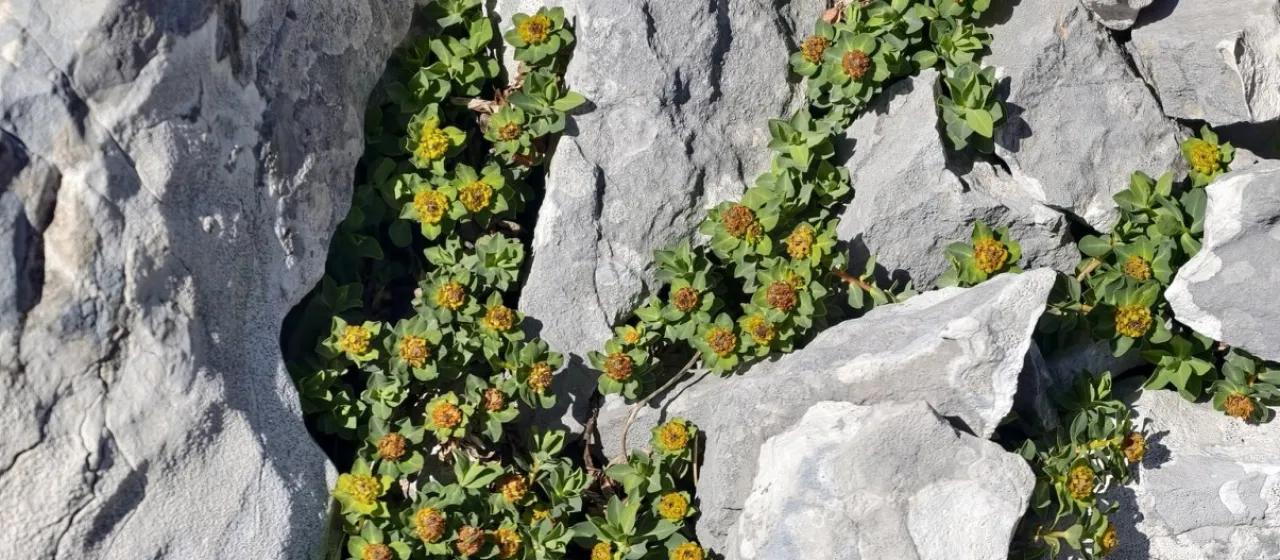
Botanically, it is characterized by its compact, low-growing form, with stems that often create dense mats or clusters. The leaves are linear to lanceolate, contributing to its drought-resistant profile. The most striking feature is the head-like inflorescence, which gives the plant its scientific and common name, providing a unique appearance that is both functional for pollination and aesthetically distinct.
When it comes to agronomy, the soil requirement is minimal in terms of fertility but high in terms of drainage. Heavy clay soils that retain water are unsuitable and lead to root rot. Irrigation should be minimized after the establishment phase, as the plant is highly adapted to water-stressed environments. Full sun exposure is essential to maintain the plant's structural integrity and chemical profile.
Economically, Euphorbia capitulata is valued for its bioactive compounds, which are the subject of ongoing research for pharmaceutical applications. Its resistance to common pests, due to the toxic milky latex, makes it a low-maintenance choice for both large-scale industrial cultivation and conservation-focused gardening. Disease management primarily involves preventing fungal outbreaks during high-humidity periods.
- Excellent drought tolerance.
- Naturally resistant to many insect pests.
- Thrives in low-fertility soils.
- Ideal for sustainable and dry-climate farming.
Photo gallery