Description
Prostrate spurge (Euphorbia chamaesyce) is an annual herbaceous plant belonging to the Euphorbiaceae family. In an agricultural context, it is widely recognized as a problematic weed that infests row crops, orchards, and vineyards, competing aggressively with crops for sunlight, soil moisture, and essential nutrients.
Originating from the Mediterranean region and parts of Southern Europe, the plant has successfully naturalized across various temperate and subtropical zones globally. It thrives in open, disturbed soil conditions, often establishing itself rapidly in areas where soil cover is incomplete or following intensive agricultural cultivation practices.
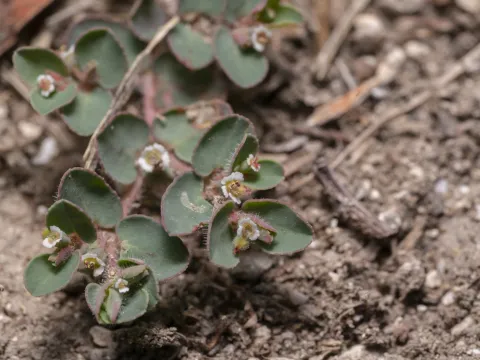
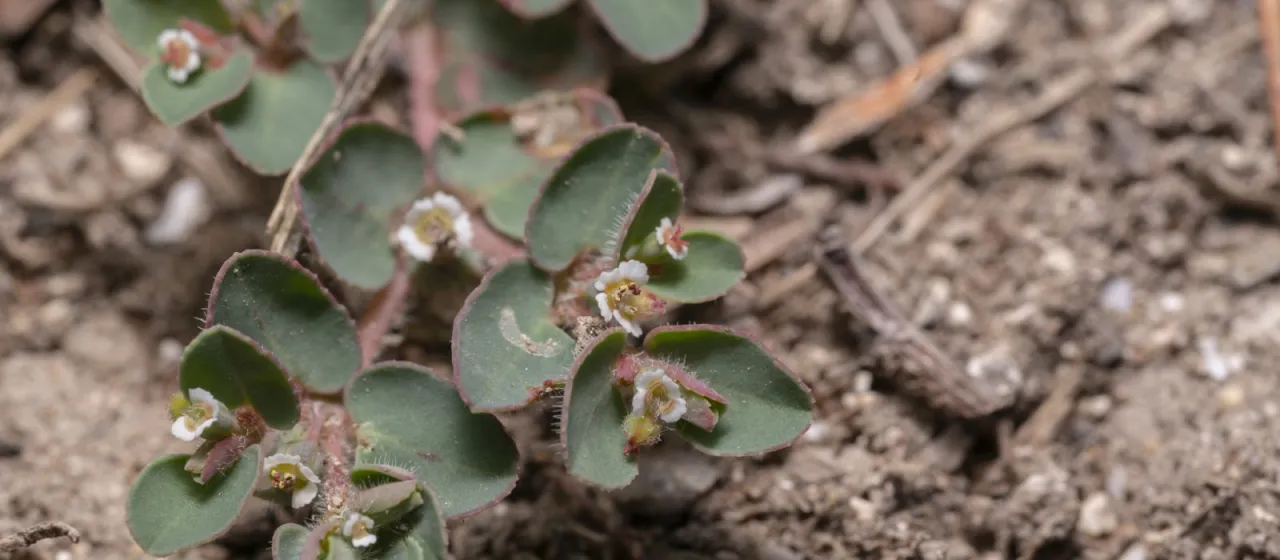
The plant is characterized by its prostrate, sprawling growth habit, with branching stems that form mats across the ground. Its leaves are small, elliptic, and often possess a characteristic reddish tint. Like all members of its genus, it contains a milky white latex sap that is toxic and can cause skin irritation, serving as a primary defense mechanism against herbivores.
Regarding environmental requirements, the plant prefers well-drained, sandy, or light-textured soils with high solar exposure. It exhibits significant drought tolerance, allowing it to persist throughout the growing season when other species might wilt. Management strategies typically involve a combination of deep tillage, mulching, and the strategic use of pre-emergent herbicides.
- High seed production and rapid dispersal.
- Deep taproot system that aids drought resistance.
- Competitive growth habit in row crops.
- Tolerance to varied soil pH levels.
Agricultural impact is largely measured by yield loss due to resource competition. Furthermore, the species can serve as a host for various pathogens, including rust fungi and viral diseases, which may spread to neighboring crops. Therefore, integrated weed management remains the most effective approach to preventing the establishment of large colonies within a farm field.
Photo gallery