
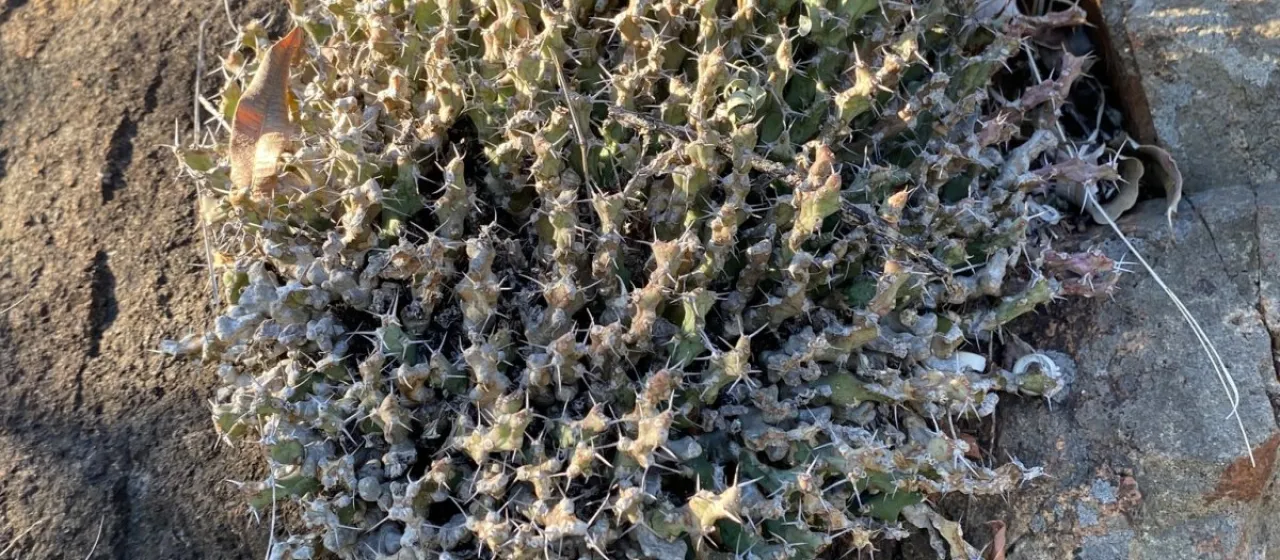
Description
Euphorbia clivicola is a perennial succulent species belonging to the Euphorbiaceae family. It is a highly specialized plant, well-adapted to extreme environmental conditions, often sought after by botanical collectors and enthusiasts of rare succulent flora.
The species originates from Southern Africa, typically found inhabiting rocky outcrops and slopes. Its evolution in such harsh, arid climates has equipped the plant with specialized physiological adaptations that allow it to conserve water and thrive in nutrient-poor, rocky substrates.
Botanically, Euphorbia clivicola features thick, succulent stems capable of storing significant moisture reserves. Like other members of its genus, it contains a latex-rich sap which serves as a natural defense mechanism against pests. Its growth habit is compact, reflecting its adaptation to rocky crevices where space and resources are constrained.
Cultivation of this species requires strict adherence to agrotechnical standards, primarily focusing on soil drainage. The planting medium must be highly porous to prevent water stagnation, which is the most common cause of root rot in this species. Adequate light levels are crucial to maintain its natural growth form and avoid etiolation.
- High exposure to bright, filtered sunlight.
- Use of mineral-based, porous soil mixtures.
- Controlled irrigation with long drying periods between watering.
- Regular inspection for common succulent pests like mealybugs.
The primary use for Euphorbia clivicola is within specialized horticultural collections and xeriscaping projects where climate conditions permit. Growers must remain vigilant against fungal infections and pests such as spider mites, which can become problematic in poor ventilation conditions, often requiring preventive care and monitoring.