
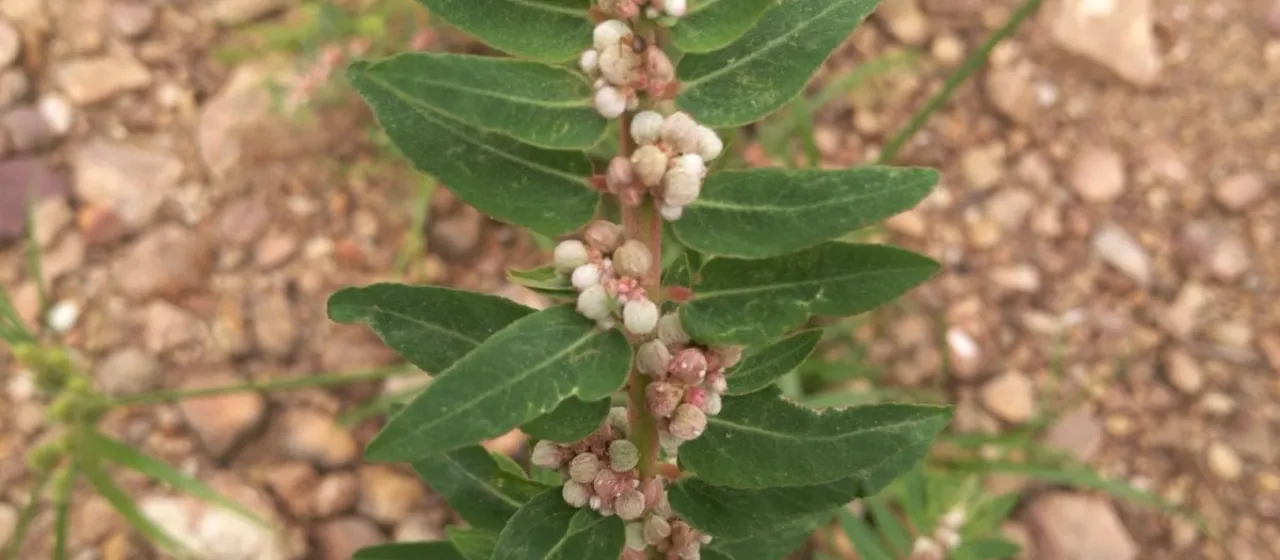
Description
Convolvulus-leaved spurge (lat. Euphorbia convolvuloides) is an annual herbaceous plant classified within the Euphorbiaceae family. In an agricultural context, this species is recognized for its invasive potential in tropical and subtropical cropping systems, where it often acts as a significant weed that competes with essential field crops.
The plant is native to tropical Africa and is well-adapted to warm, dry climates. It typically thrives in regions with seasonal rainfall patterns, populating fields, pastures, and disturbed soil areas. Its ability to colonize large tracts of land quickly is a direct result of its evolutionary success in high-temperature environments with varying nutrient availability.
Botanically, the species displays the signature characteristics of the Euphorbia genus, including a milky latex sap and the production of cyathia — specialized inflorescences that mimic single flowers. The stems are branched and flexible, while the leaves are arranged to optimize photosynthetic efficiency in high-light conditions, allowing the plant to reach maturity rapidly.
From an agrotechnical perspective, Euphorbia convolvuloides is considered a pest that requires strategic management. Effective control measures usually involve a combination of mechanical weeding, particularly early in the season, and the use of chemical herbicides. Because of its resilience, soil management practices such as crop rotation and intercropping are crucial to reduce the seed bank in the soil.
Regarding its utility, the plant is not typically used for commercial agricultural production. It contains latex compounds that can be irritating or toxic to livestock, making it a nuisance in grazing lands as well. Future research focuses on understanding its physiological responses to drought, which could provide insights into improving the resilience of more commercially viable crops in changing climate conditions.