
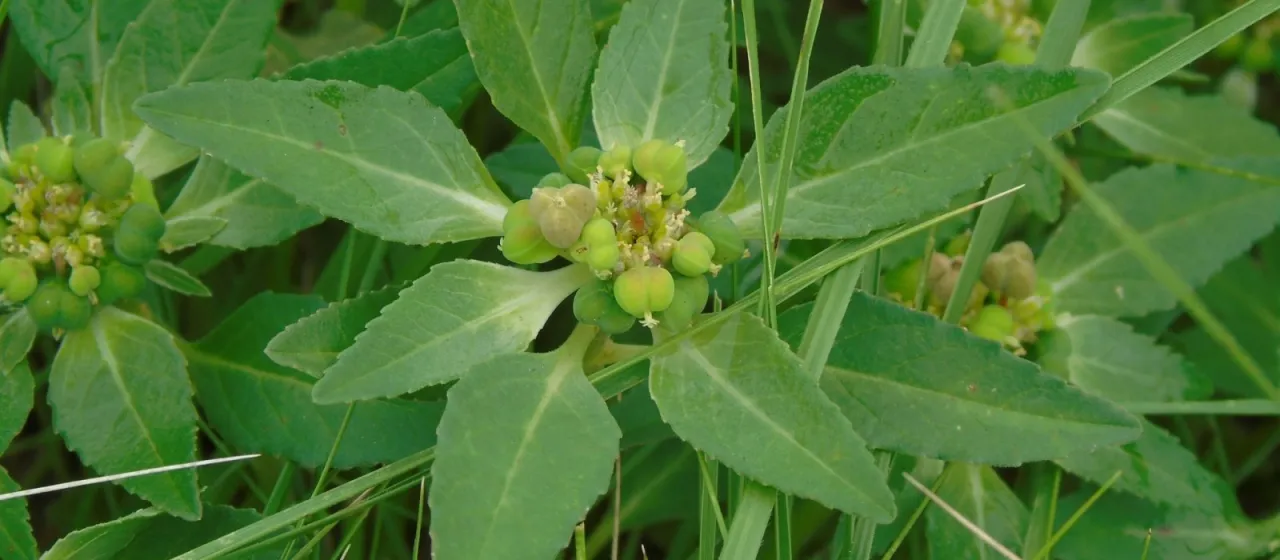
Description
Euphorbia davidii, commonly known as David's spurge, is an annual herbaceous plant belonging to the Euphorbiaceae family. Within the agricultural sector, it is recognized as a troublesome weed that can cause significant economic losses in various row crops due to its aggressive growth pattern and high competitive ability.
Originating from North America, this species has successfully naturalized in many parts of the world. It thrives in diverse environments, from abandoned lands and roadsides to highly productive agricultural fields. Its ability to invade new territories is facilitated by the efficient dispersal of its seeds, which are highly adaptable to various climatic zones.
From a botanical perspective, Euphorbia davidii typically grows to a height of 30–80 cm. It features lanceolate leaves and a distinct branching habit. A key identifier of this plant is the white, milky latex contained within its stems and leaves, which can be irritating to the skin and toxic if ingested by livestock, serving as a primary defense mechanism.
In terms of growth requirements, this weed is highly resilient. It prefers open, sunny conditions and is capable of thriving in a wide range of soil types, including nutrient-poor substrates. Its drought tolerance allows it to establish itself during periods when crop plants might be experiencing water stress, thereby providing it with a significant ecological advantage.
Management of Euphorbia davidii requires an integrated approach to maintain crop productivity. Essential agricultural strategies include:
- Implementing diverse crop rotations that interrupt the life cycle of the weed.
- Using pre-emergent and post-emergent herbicides specifically labeled for control of spurge species.
- Executing precision tillage to remove seedlings before they reach reproductive maturity.
- Maintaining field borders and irrigation channels to prevent the migration of seeds into the primary crop areas.
The plant demonstrates high resistance to many common pests and diseases, largely due to its chemical composition. However, farmers should be aware that Euphorbia davidii can serve as an alternate host for various plant pathogens. Consistent monitoring and early intervention are crucial to prevent the establishment of large, permanent seed banks that could affect future harvests for many years.