Description
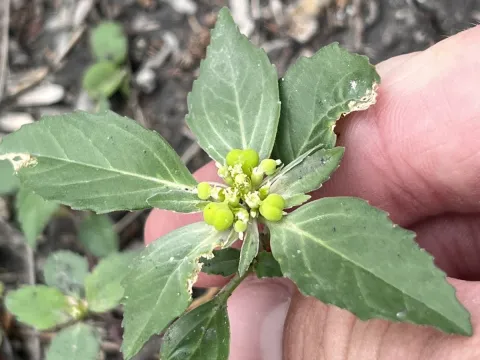
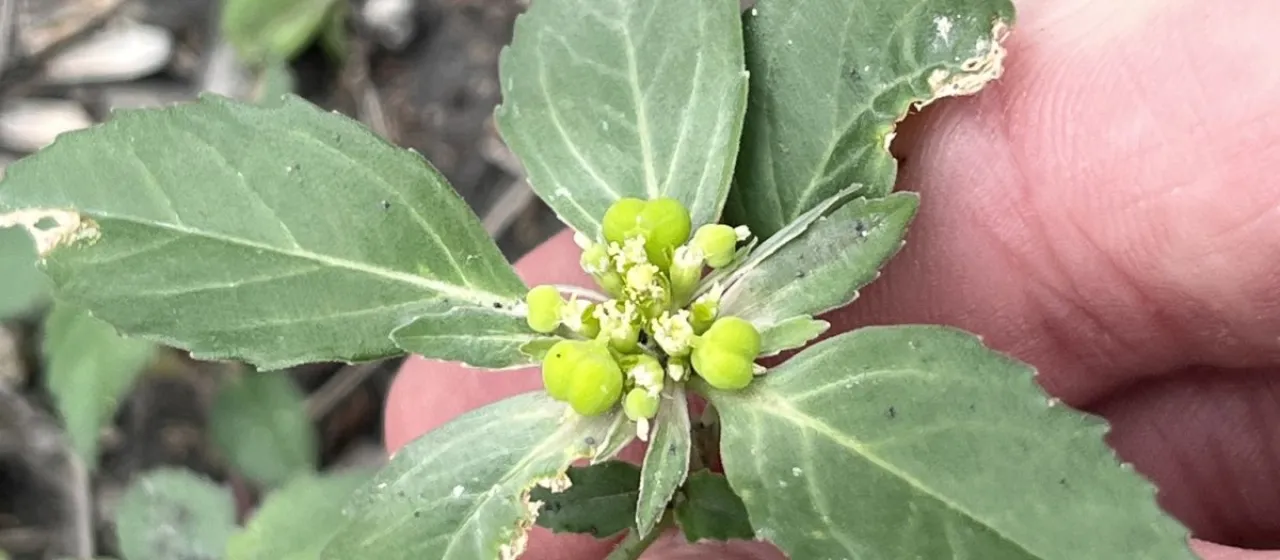
Toothed spurge (lat. Euphorbia dentata) is an annual herb belonging to the Euphorbiaceae family. In an agricultural context, it is widely recognized as a significant weed that competes with essential crops, often leading to reduced harvest quality and yield losses in major commodity fields.
Originally native to North America, the plant has successfully expanded its range across many temperate and subtropical zones globally. Its adaptability to diverse soil types and environmental conditions makes it a persistent invasive species that establishes itself rapidly in disturbed lands, roadsides, and cultivated agricultural areas.
Botanically, the plant is characterized by an upright stem that can reach heights of up to 60 centimeters. Its leaves typically exhibit a serrated or "toothed" edge, which serves as a key identifying trait. Like other members of the spurge genus, it exudes a milky, caustic latex when the tissue is damaged, which serves as a defense mechanism against herbivores.
Toothed spurge thrives in full sun and well-drained soils, showing remarkable resilience in drought conditions. Effective agronomic management requires a combination of strategies, including crop rotation, competitive planting, and timely mechanical cultivation to prevent the plant from reaching the flowering stage. Soil seed bank management is critical, as seeds can remain viable for several years.
From an agricultural standpoint, the plant is considered a nuisance. Beyond physical competition for resources, the latex contains toxic compounds that can be harmful to livestock if ingested in contaminated fodder. Furthermore, it serves as a host for various agricultural pests and pathogens, potentially harboring viruses that can devastate nearby commercial crops such as soybeans.
- Strong competition for moisture and soil nutrients.
- Toxicity issues regarding livestock feed safety.
- Ability to produce large quantities of long-lived seeds.
- Risk of hosting viral plant diseases.
Photo gallery