
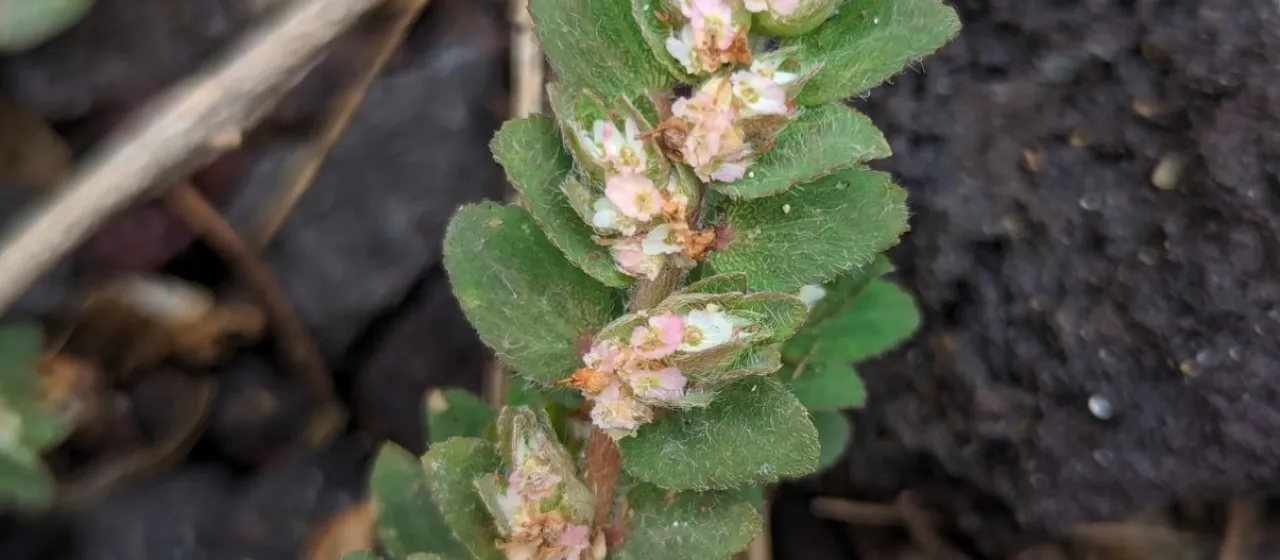
Description
Euphorbia dioeca is a notable member of the Euphorbiaceae family, recognized for its adaptability to dry environments and unique physiological traits. As a succulent-like herb, it occupies a specific niche in native ecosystems, primarily characterized by regions with limited rainfall and well-drained soils.
Originating from parts of North and Central America, the plant is well-suited to arid and semi-arid climates. Its geographic distribution is limited to habitats where it can thrive on rocky or sandy terrain, often acting as a pioneer species in harsh landscapes that are typically unsuitable for traditional crops.
Botanically, the species is defined by its prostrate or ascending growth habit and its characteristic cyathium inflorescences. A defining feature is the presence of white, milky latex within its tissues, which serves as a potent chemical defense mechanism against herbivores and environmental pathogens, ensuring the plant's survival under stress.
Cultivation of Euphorbia dioeca requires strict attention to soil drainage and light exposure. In an agricultural or horticultural context, providing a porous substrate is crucial to prevent root rot. The plant thrives in full sunlight, which encourages dense growth and healthy development of its specialized succulent foliage.
In terms of practical application, this species is primarily valued in xeriscaping and botanical research. While it is not a traditional food or fiber crop, its role in ecological restoration, particularly in preventing soil erosion in arid climates, is being increasingly recognized. Its resistance to common pests makes it an interesting subject for low-maintenance landscaping.
- Excellent tolerance to drought conditions.
- Requires well-draining, sandy or rocky soil.
- Features toxic latex sap as a natural defense.
- Thrives in full sun and high heat environments.