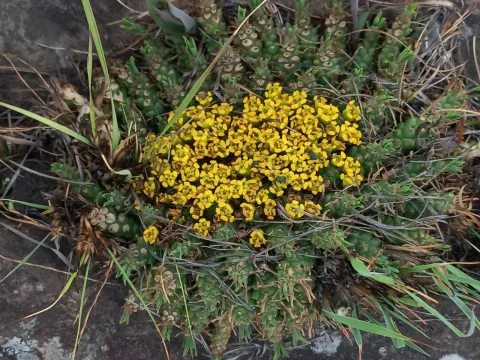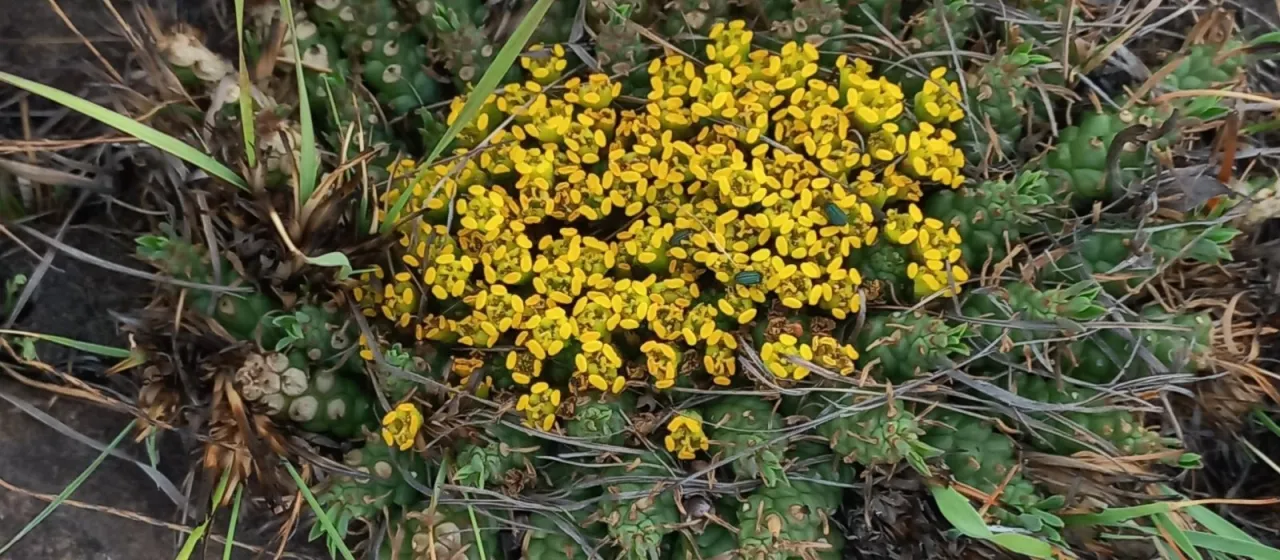
Description
Euphorbia flanaganii, commonly referred to as Medusa's Head, is a remarkable succulent species belonging to the Euphorbiaceae family. It is widely cultivated for its unique architectural form, featuring a central caudex from which multiple serpentine branches radiate, creating a distinct display that has made it a favorite among succulent collectors worldwide.
This species is native to the Eastern Cape region of South Africa. In its natural habitat, it thrives in rocky terrain and arid conditions, which has influenced its physiological adaptations to store water in its thickened stem. Due to these origins, the plant is highly sensitive to environmental changes and requires specific conditions to flourish in cultivation.
Botanically, it is classified as a dwarf, succulent shrub. The plant's structure includes a central, partially subterranean caudex that functions as a water reservoir. The branches are typically deciduous or semi-deciduous, and in late spring or summer, they produce small, yellow-green cyathia (flower structures) which provide a delicate visual contrast to the fleshy stems.
Agricultural and gardening requirements focus on mimicking its native environment. A highly porous, mineral-based soil mix is essential to ensure rapid drainage. Overwatering is the most critical threat, as the roots and caudex are highly susceptible to rot if left in moist conditions. Exposure to bright, filtered light is necessary to maintain the plant's compact, dense growth habit.
- Provide bright, indirect sunlight throughout the year.
- Use a coarse, well-draining cactus potting mix.
- Implement a strict dry-down period between waterings.
- Ensure adequate air circulation to prevent pests.
Common health issues include stem rot caused by fungal pathogens, often triggered by excessive humidity. Pests such as mealybugs and spider mites are frequent adversaries that target the crevices between the branches. Handling requires care due to the toxic, milky latex sap, which can cause severe skin and eye irritation, necessitating the use of gloves during maintenance or propagation.
Photo gallery