
Description
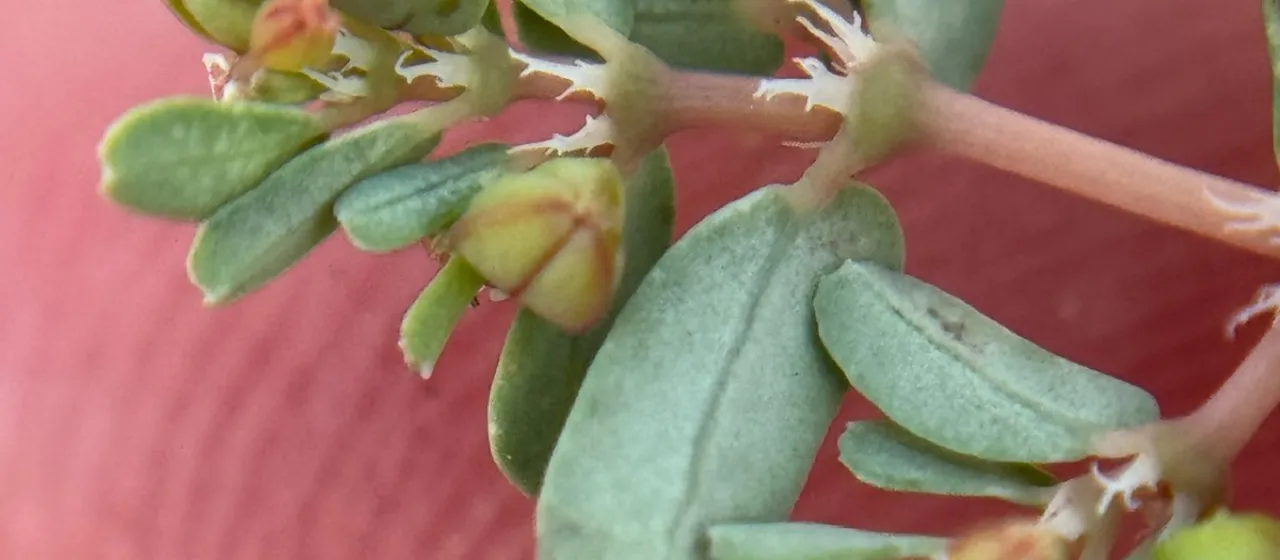
Ridge-seeded spurge (Euphorbia glyptosperma) is an annual herbaceous plant belonging to the Euphorbiaceae family. In agricultural settings, it is classified as a weed rather than a crop, often competing with field crops for water, nutrients, and sunlight in arid and semi-arid environments.
The plant is native to North America. Its natural range encompasses vast areas of the continent, where it thrives in disturbed soils, roadsides, and cultivated land. Due to its high adaptability, it has become a prevalent nuisance in various ecosystems, easily invading farmland where the soil surface remains relatively open.
Botanically, ridge-seeded spurge is distinguished by its prostrate, mat-forming habit and small, opposite, often reddish-tinged leaves. Like many species in its family, it exudes a milky, latex-like sap when damaged, which can cause skin irritation. The seeds are small and possess distinct ridges, which give the plant its specific scientific name.
While the plant serves no role in commercial agriculture, it is considered an invasive weed that necessitates management. It prefers sandy or gravelly soils but is highly resilient to dry conditions. Its presence in fields can interfere with harvesting operations and may contaminate harvested grain if not properly controlled during the growing season.
Management strategies focus on integrated pest management practices:
- Timely application of post-emergence herbicides.
- Tillage operations to disrupt the root system in early growth stages.
- Maintaining healthy crop canopy cover to shade out the weed.
- Proper sanitation of farm equipment to prevent seed dispersal.