
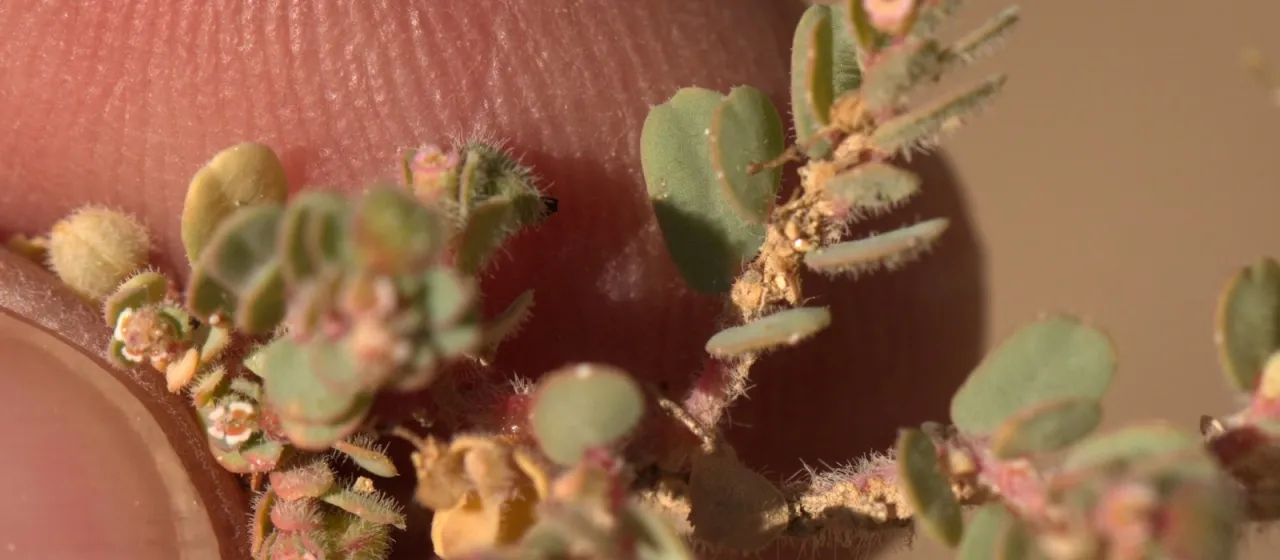
Description
Euphorbia granulata is a specialized succulent herb species belonging to the Euphorbiaceae family. In an agricultural context, it is recognized as a resilient desert plant that possesses significant adaptive traits for growth in environments characterized by extreme aridity and minimal nutrient availability.
The species is indigenous to the arid regions of North Africa, the Middle East, and parts of South Asia. It typically occupies stony deserts, dry riverbeds, and sandy habitats, where it thrives under high-temperature regimes and infrequent precipitation, making it a subject of study for potential use in hyper-arid agricultural systems.
Botanically, the plant is identified by its prostrate, spreading stems that form dense, low-growing mats. The leaves are typically small and often exhibit pubescence to reflect intense sunlight and reduce transpiration rates. Like other members of the genus, it contains a milky latex sap that serves as a robust chemical defense mechanism against various herbivores and pathogens.
Regarding agrotechnical requirements, Euphorbia granulata demands well-drained, porous soils, ideally with high mineral content and low organic matter. The cultivation success is heavily dependent on maintaining optimal light exposure while strictly avoiding waterlogging, which is detrimental to the roots. The plant is well-adapted to high UV radiation and extreme heat, requiring little to no supplemental irrigation once established.
Economically, the plant is primarily valued for its role in phytoremediation and soil stabilization in desertified landscapes. Additionally, research explores its secondary metabolites for pharmaceutical applications due to the bioactive properties of its latex. Common agronomic challenges include fungal infections related to root health and infestations by typical succulent pests, such as aphids and spider mites, particularly in greenhouses.