
Description
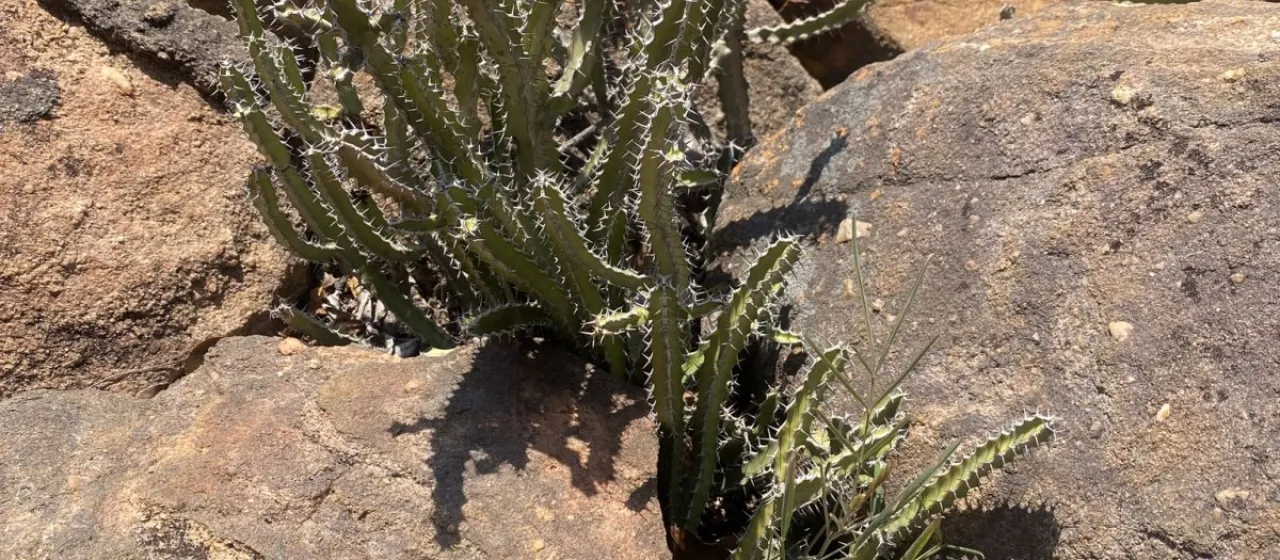
Euphorbia griseola is a perennial succulent species belonging to the Euphorbiaceae family. This plant is known for its distinct, candelabra-like growth habit, characterized by succulent, segmented stems that can reach impressive heights. It is a classic example of an arid-adapted plant that has evolved to thrive in harsh, water-scarce environments.
Originating from Eastern and Southern Africa, this species is typically found in regions such as Ethiopia, Kenya, and Tanzania. Its natural habitat includes rocky hillsides and dry savanna woodlands. These environments provide the high levels of solar radiation and the specific soil drainage conditions that the plant requires to maintain its structural integrity and health.
Botanically, Euphorbia griseola is distinguished by its grey-green, ribbed stems which are armed with pairs of sharp, brownish spines. The leaves are generally vestigial or ephemeral, as the stem itself performs the primary photosynthetic functions. Like most members of the genus, it produces a milky latex that is toxic, serving as a powerful deterrent against herbivores and protecting the plant from environmental pathogens.
Cultivation of Euphorbia griseola requires strict adherence to xerophytic gardening principles. The soil must be highly porous, typically composed of coarse sand, perlite, and a small fraction of organic matter to prevent water stagnation. During the growing season, it thrives in direct, intense sunlight, while the winter period necessitates a dormant phase with very limited watering to mimic the dry season of its native range.
- Excellent drought resistance.
- Requires well-drained, sandy substrate.
- Sensitivity to frost and cold-wet conditions.
- Propagated through cuttings, requiring callus formation before planting.
This species is primarily utilized in xeriscaping and botanical collections for its sculptural aesthetic. When maintained in improper conditions, the plant is susceptible to pests such as mealybugs and spider mites. Furthermore, root rot caused by improper soil moisture levels remains the most significant threat to the longevity of the plant in a domestic or nursery setting.