Description
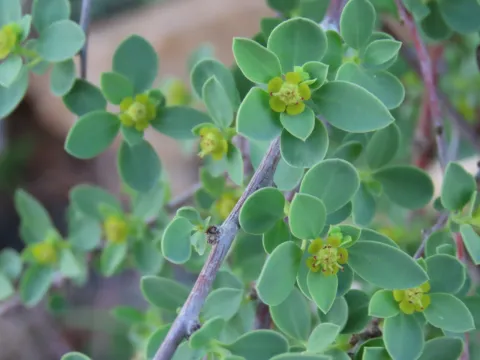
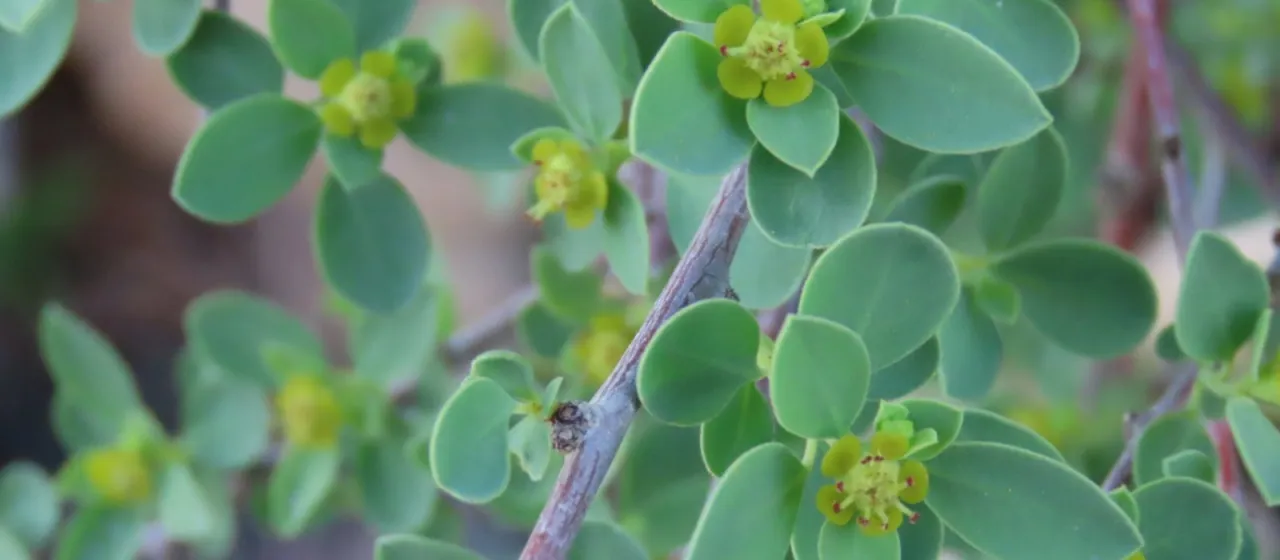
Euphorbia guerichiana is a perennial deciduous shrub belonging to the Euphorbiaceae family. This species is native to the arid regions of Namibia and South Africa, where it has evolved to thrive in harsh, water-scarce environments characterized by rocky terrain and high heat levels.
The plant is anatomically structured for survival in semi-desert climates. It features stiff, grey-green branches that are well-adapted to withstand prolonged drought. Like many other members of its genus, it sheds its small, lanceolate leaves when moisture levels drop, significantly reducing its surface area for transpiration.
In terms of cultivation, this species requires specific soil conditions to remain healthy. A loose, mineral-based substrate with excellent drainage is mandatory to prevent root rot. It thrives in locations with full sun exposure and requires a distinct dry rest period during winter months to mimic its natural dormancy cycle.
From an agronomical perspective, Euphorbia guerichiana is primarily valued in xeriscape gardening and botanical collections. It is not a traditional food crop, but its hardiness makes it a subject of interest for sustainable, low-water landscaping in arid regions where traditional cultivation is impossible.
Management of the plant requires attention to typical succulent pests such as mealybugs and spider mites, which can be controlled through careful environmental monitoring and localized pest management. Proper air circulation and controlled watering regimes are the most effective preventative measures against fungal and bacterial rot infections.
Photo gallery