Description
Herniaria-leaved spurge (Euphorbia herniariifolia) is a herbaceous perennial belonging to the Euphorbiaceae family. This low-growing, mat-forming plant is highly valued for its ability to create dense, evergreen carpets, making it an excellent choice for xeriscaping and alpine garden designs.
Originating from the mountainous regions of Southern Europe and the Balkans, this species has evolved to thrive in harsh, rocky environments. Its natural habitat includes limestone screes and exposed slopes, which dictates its preference for well-drained, mineral-rich substrates in cultivation settings.
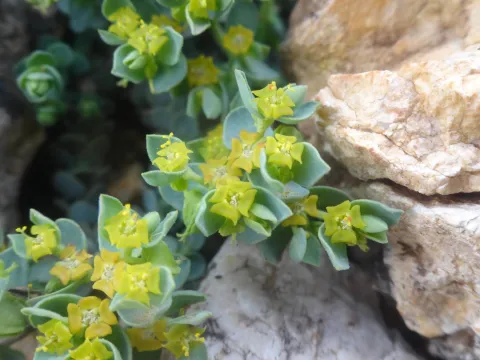
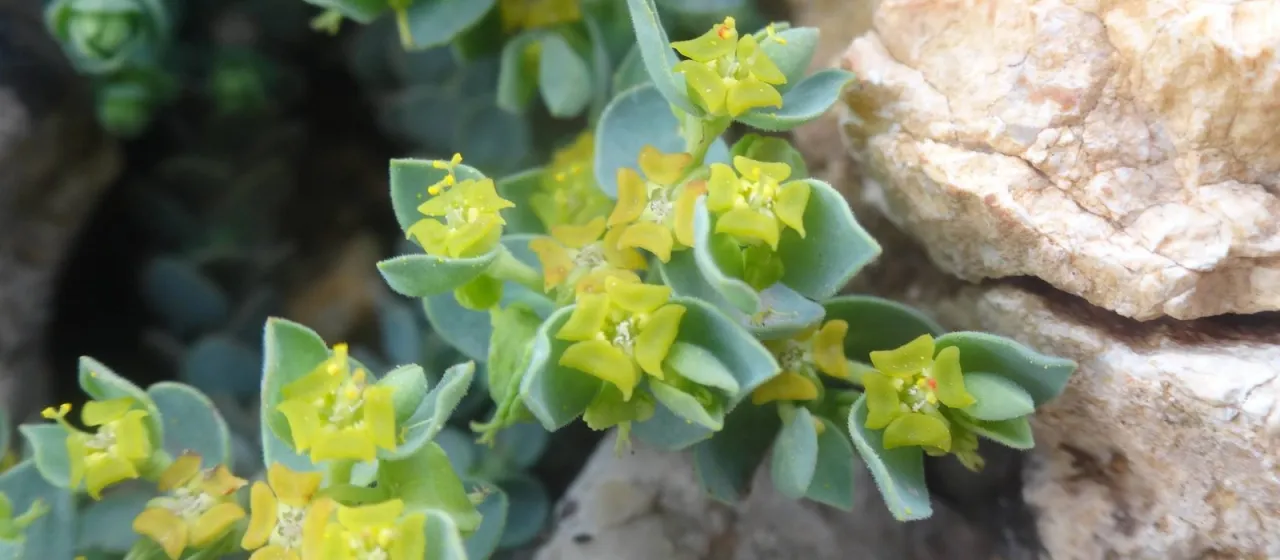
Botanically, the plant features creeping stems and small, rounded leaves that often exhibit a glaucous or purplish tinge. During late spring and early summer, it produces characteristic cyathia inflorescences framed by yellowish-green bracts. The overall structure is compact, allowing it to withstand wind and variable weather conditions typical of higher altitudes.
Regarding agronomic requirements, the plant demands full sun and exceptional drainage. It is not suitable for heavy, water-retentive clay soils, as the root system is prone to rot in anaerobic conditions. Minimal fertilization is recommended, as high nitrogen levels promote weak, succulent growth that is less resistant to winter frost and pests.
Its primary use is in ornamental horticulture, specifically for rock gardens, crevice planting, and border edging. Because of its drought tolerance, it serves as an excellent low-maintenance ground cover that suppresses weed growth through its dense habit, reducing the need for intensive chemical weed control.
- Superior drought tolerance.
- Thrives in poor, rocky soil.
- Low maintenance requirement.
- Excellent ground cover for slopes.
Pest management for Euphorbia herniariifolia primarily focuses on preventing fungal pathogens such as root rot, which occurs if moisture levels remain too high. Spider mites can occasionally affect the foliage during periods of extreme heat and dryness. Maintaining good air circulation and avoiding overhead irrigation are the most effective cultural practices for ensuring plant health.
Photo gallery