
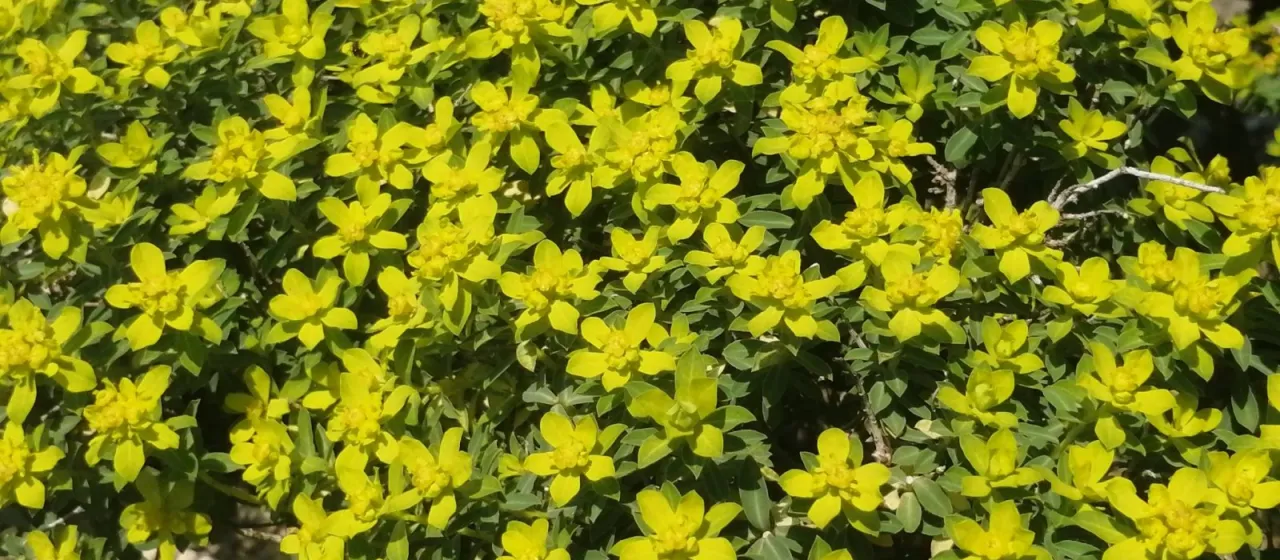
Description
Jerusalem spurge (lat. Euphorbia hierosolymitana) is a perennial herbaceous plant belonging to the Euphorbiaceae family. This species is recognized by its structural elegance and the presence of a milky sap, which is a classic physiological marker of the Euphorbia genus, serving as a defensive mechanism against various herbivores.
Native to the Eastern Mediterranean basin, this plant is naturally adapted to rugged, rocky terrains and scrublands typical of Israel, Jordan, and Lebanon. Its natural habitat is defined by a Mediterranean climate characterized by mild, wet winters and long, dry, hot summers, where it demonstrates remarkable resilience.
From a botanical standpoint, the plant typically reaches a height of one meter. It features robust stems with elongated leaves and produces distinctive inflorescences called cyathia. These are adorned with bright yellow-green bracts, providing significant ornamental value during the spring blooming season.
Regarding cultivation, the primary requirement is excellent soil drainage. Jerusalem spurge thrives in well-aerated, limestone-based, or sandy soils. It is highly intolerant of waterlogging, which often leads to root fungal infections. Maintenance is generally low, as the plant is naturally adapted to nutrient-poor environments and requires minimal supplemental fertilization.
In practical application, the plant is valued primarily for its drought-tolerant properties in xeriscaping and ecological restoration projects. While the sap contains phytochemicals that have been subject to pharmacological investigation, it is important to handle the plant with care, as it can be toxic and cause skin and eye irritation if the latex comes into contact with human tissue.
- Thrives in full sun exposure
- Requires well-drained, porous soil
- Low water requirements once established
- Caution: sap is toxic and irritating