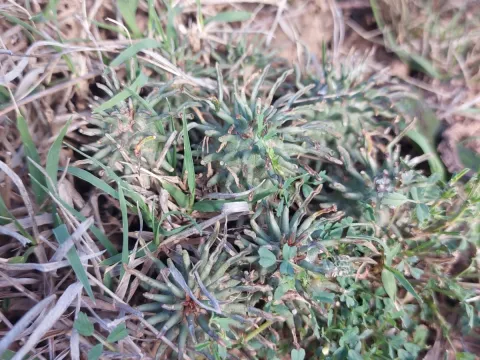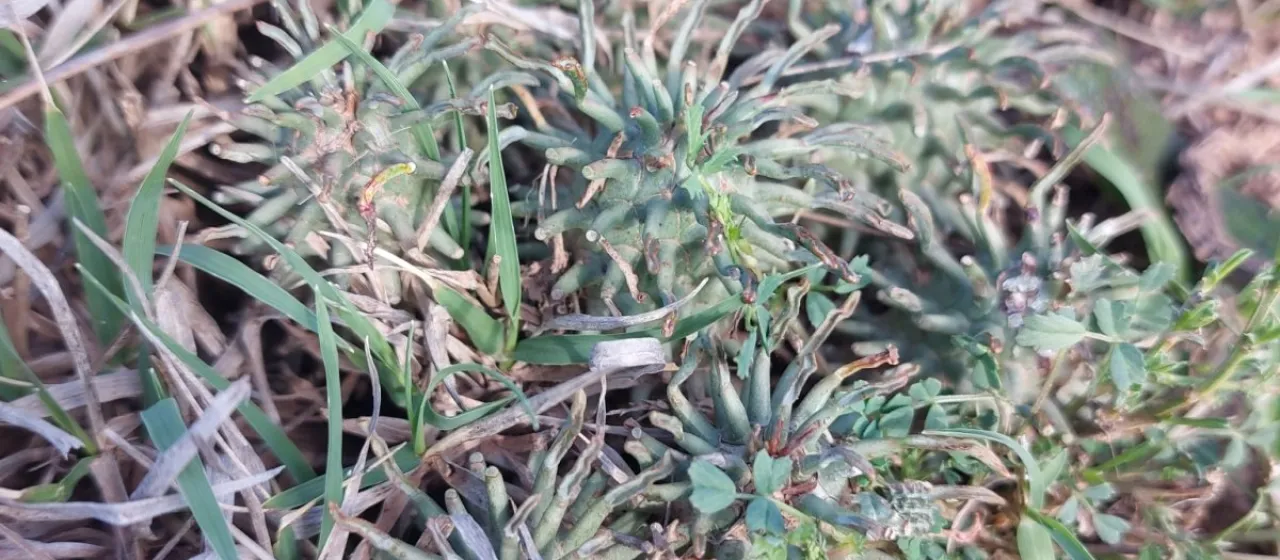
Description
Underground spurge (Euphorbia hypogaea) is a rare and distinct succulent belonging to the Euphorbiaceae family. In an agricultural and horticultural context, this plant is primarily valued as a botanical curiosity rather than a food or industrial crop, attracting interest from specialist nurseries and plant collectors worldwide.
The plant originates from the arid landscapes of Southern Africa. Its natural habitat is characterized by extreme environmental stress, including high temperatures, intense solar radiation, and very low precipitation levels. These conditions have shaped the species' unique survival mechanisms, allowing it to thrive in rugged, rocky terrain where nutrients are scarce.
Botanically, the species is defined by its geophytic habit, where a significant portion of its structure resides beneath the soil surface. This adaptation allows the plant to protect its sensitive tissues from desiccation and heat. It features a succulent body containing a milky, toxic latex, which is a signature defense mechanism against herbivores found across the genus.
Cultivation of this species requires a deep understanding of its physiological needs. Agricultural success depends on providing high-light conditions and an extremely well-draining mineral-based substrate. The plant is notoriously intolerant of excess moisture, and a improper irrigation strategy will quickly lead to root and stem rot, which is the primary cause of plant loss in cultivation.
- Light requirement: Full sun to partial intense exposure.
- Substrate: Gritty, sandy, or gravelly mix with minimal organic material.
- Watering: Extremely sparse, avoiding any prolonged moisture in the soil.
- Temperature: Sensitive to cold, prefers stable warm climates.
The economic and practical uses for this species are limited to specialized ornamental horticulture and botanical research. Typical pests include mealybugs and root mites, which can be difficult to control due to the plant's delicate nature. Most significant health issues are related to fungal or bacterial infections caused by poor ventilation and waterlogging.
Photo gallery