Description
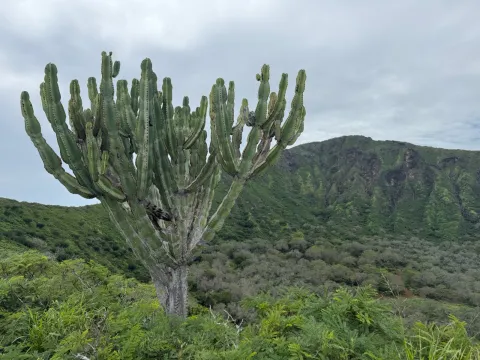
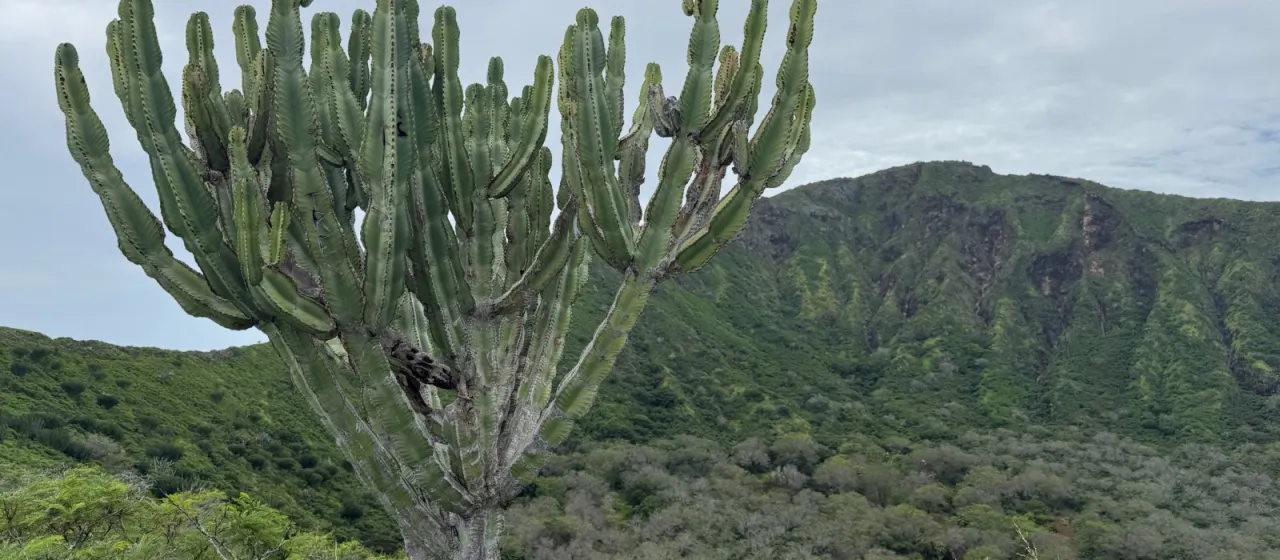
The Candelabra tree (Euphorbia ingens) is a prominent succulent species belonging to the Euphorbiaceae family. It is widely recognized for its massive, tree-like growth habit, which often leads to it being confused with large cacti. However, unlike cacti, this species features distinct succulent stems that branch out into a structural, crown-like canopy.
The plant originates from the arid regions of Southern Africa, where it thrives in savanna landscapes, rocky hillsides, and dry woodlands. Its range of cultivation has expanded to include various tropical and subtropical regions worldwide, where it is utilized for its exceptional drought tolerance and ornamental value in xeriscaping projects and arid garden designs.
Botanically, Euphorbia ingens is defined by its succulent, ribbed branches which feature small, ephemeral leaves and pairs of spines. A key biological characteristic is the presence of a milky, highly toxic latex sap that exudes when the plant is cut or damaged. The plant possesses an extensive root system, which helps it stabilize in sandy soils while absorbing moisture during infrequent rainfall.
Agricultural requirements focus heavily on soil structure and water management. The plant demands extremely well-drained, porous soil to prevent root rot, which is the primary cause of failure in cultivation. It is highly photophilous and requires full sun exposure to maintain its characteristic growth pattern. Fertilization should be kept to a minimum to ensure steady, healthy development.
The primary economic use of the Candelabra tree is in the landscape industry and ornamental horticulture. It is frequently employed as an architectural focal point in large-scale garden designs and interior plantscapes where space permits. Beyond landscaping, it serves as a staple in specialized succulent collections, demonstrating remarkable resilience and adaptability in controlled environments.
Typical diseases and pests include:
- Root rot caused by overwatering.
- Mealybugs.
- Spider mites.
- Scale insects.
Photo gallery