Description
The Ipecac spurge (Euphorbia ipecacuanhae) is a perennial herbaceous plant belonging to the Euphorbiaceae family. This species is notably adapted to harsh, sandy environments, developing a deep and extensive root system that allows it to persist through seasonal droughts that would be fatal to less resilient vegetation.
Native to the eastern United States, particularly the sandy regions along the Atlantic coast, the plant thrives in pine barrens and open, sandy clearings. Its evolutionary history is deeply tied to nutrient-poor soils where it successfully competes by maximizing its subterranean biomass relative to its above-ground foliage.
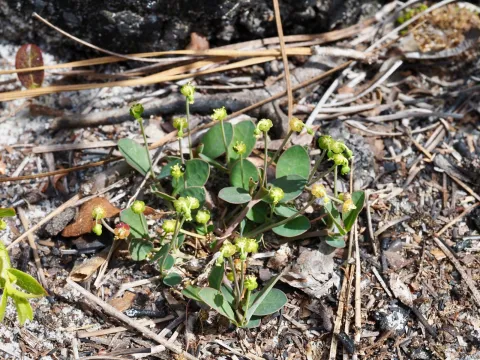
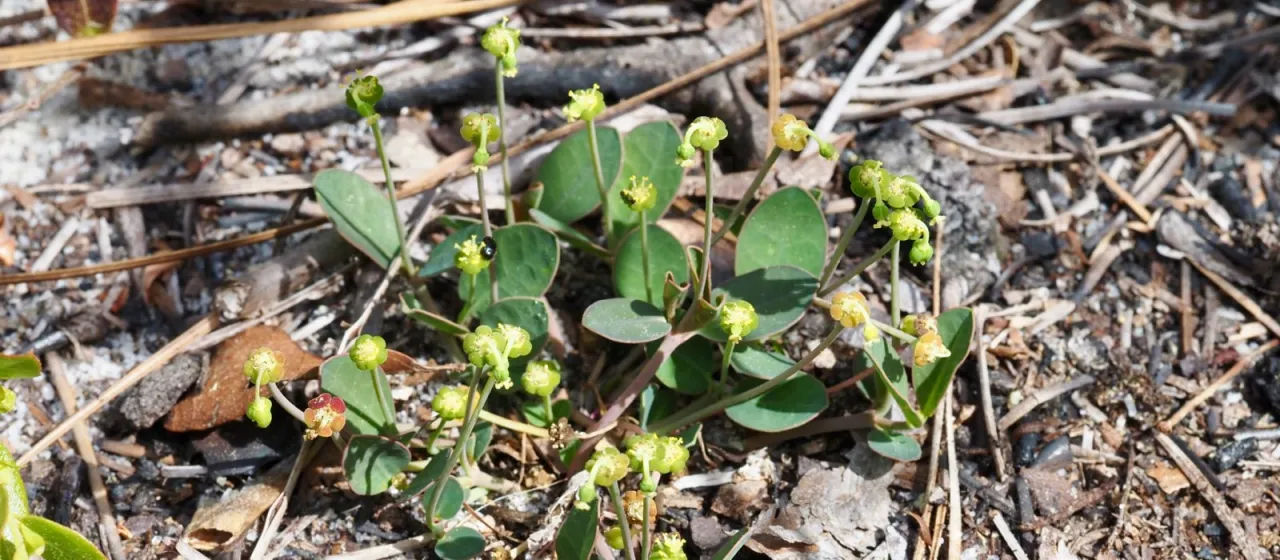
Botanically, Euphorbia ipecacuanhae is highly polymorphic, displaying significant variation in leaf shape, ranging from linear to broadly ovate, and exhibiting colors from deep green to rich purple. The plant's ability to produce a milky, latex-like sap is a diagnostic feature of the genus and serves as a chemical deterrent against most herbivores.
Cultivation of this species requires strict adherence to soil conditions: highly porous, sandy substrates are mandatory. The plant's primary demand is for excellent drainage to prevent crown and root rot, while supplemental fertilization is usually unnecessary and potentially harmful, given its adaptation to impoverished soil profiles.
In terms of economic utility, the plant has been historically significant for its medicinal properties, specifically as an emetic. However, due to the high toxicity of its compounds, contemporary applications are largely restricted to botanical studies and specialized research into the phytochemical profile of the Euphorbiaceae family.
Photo gallery