Description
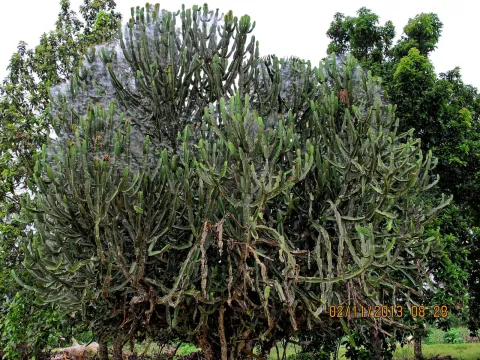
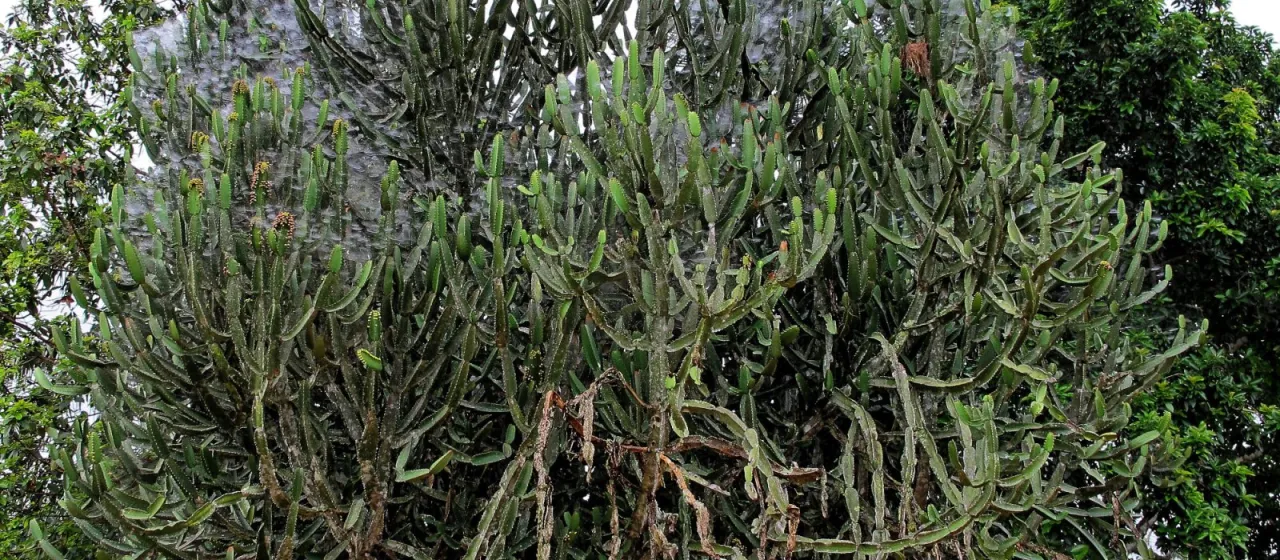
Euphorbia kamerunica is a succulent shrub belonging to the family Euphorbiaceae. Known for its distinct architectural growth, this species develops into a branched, tree-like form often compared to a candelabra. It is well-adapted to harsh environments, making it a subject of interest for xeriscaping and sustainable landscaping in arid tropical regions.
The species is native to the tropical zones of Central and West Africa, specifically Cameroon. It thrives in regions characterized by high temperatures and distinct dry seasons. In its natural habitat, it is found in rocky outcrops and dry savannahs where it utilizes its specialized physiology to survive prolonged droughts without significant biomass loss.
Botanically, the plant is defined by its succulent, ribbed stems armed with spines derived from modified stipules. Leaves are vestigial or ephemeral, appearing briefly during wet periods. A key biological characteristic is the presence of a milky, toxic latex, which serves as a potent chemical defense against herbivory. The plant's ability to store water within its tissues is its primary survival strategy.
Cultivation requirements for Euphorbia kamerunica necessitate extreme attention to soil drainage. The plant demands well-aerated, sandy, or rocky substrates to prevent root rot, which is the most frequent cause of mortality in cultivation. It requires full solar exposure to maintain its structural integrity and prevent etiolation. Propagation is typically achieved through cuttings, which must be dried before planting to prevent decay.
The practical application of the plant is largely decorative, used to create impenetrable thorny hedges. In some traditional contexts, extracts have been investigated for medicinal properties, though the toxicity of the latex limits such usage. Key management challenges include monitoring for mealybugs and preventing fungal pathogens caused by overly humid environmental conditions or excessive irrigation.
Photo gallery