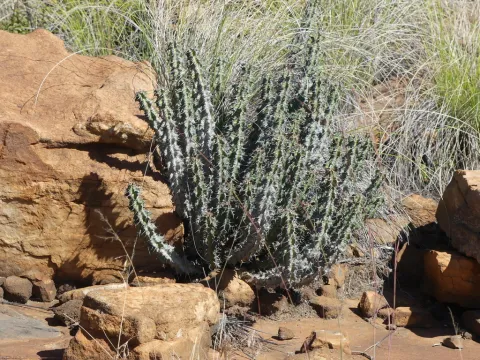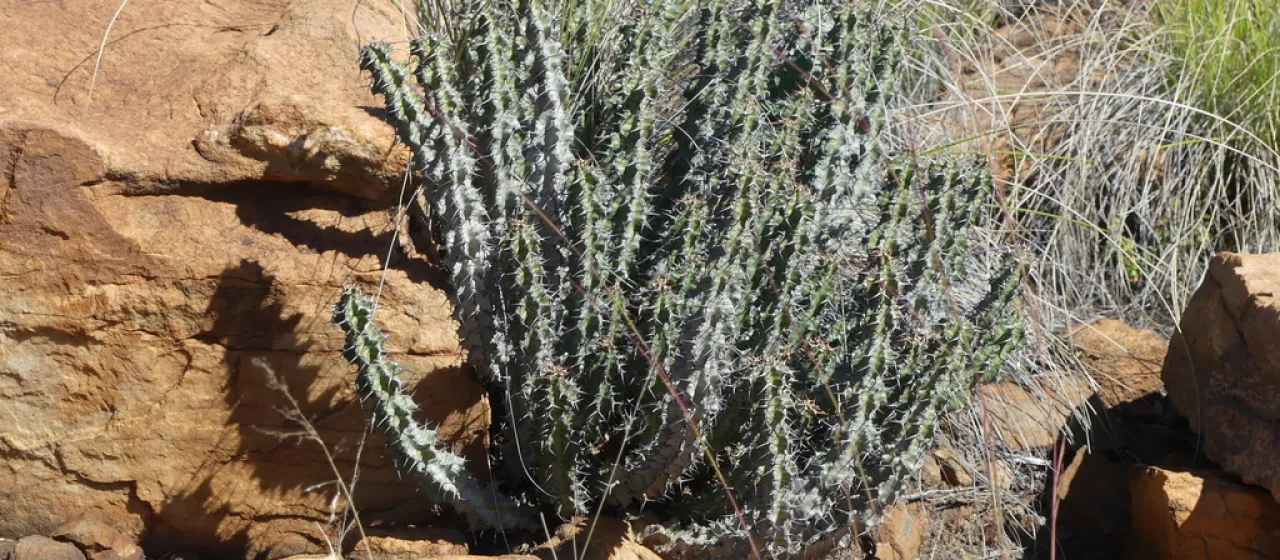
Description
Euphorbia knobelii is a rare species of succulent perennial plant belonging to the Euphorbiaceae family. Within the fields of horticulture and desert plant cultivation, this species is highly regarded for its unique architecture and exceptional adaptability to harsh arid environments, making it a significant subject for both professional collections and dry-landscape research.
The plant originates from the arid regions of Southern Africa, where it has evolved to thrive in rocky outcrops with minimal soil nutrition and rainfall. Its natural range is restricted to specific microclimates that provide high sun exposure and extreme drainage. In cultivation, it requires conditions that mimic its native habitat to maintain physiological stability and promote healthy growth.
Botanically, the plant displays succulent stems designed for water storage, acting as a survival mechanism against prolonged drought. The outer structure of the plant often exhibits specialized adaptations to minimize transpiration. Like all members of the Euphorbia genus, the plant contains a distinct, often toxic, milky latex that acts as a natural chemical defense against herbivores and pests.
Agronomic requirements are focused on substrate management; the soil must be highly inorganic, consisting primarily of grit, gravel, or coarse sand to ensure rapid drainage. Over-watering is the primary cause of plant failure, as the roots are highly susceptible to rot when kept in damp, anaerobic conditions. Fertilization should be kept to a minimum, applied only during the peak of the growing season.
In terms of economic and practical application, Euphorbia knobelii is grown mainly for specialized indoor botanical collections and xeriscaping projects. Pests that typically affect this culture include mealybugs and spider mites. Effective management requires constant monitoring of the plant's health, particularly ensuring that humidity remains low and aeration remains high throughout the year.
- Maintain excellent drainage to prevent root rot.
- Handle with care due to the toxic latex.
- Provide maximum sunlight to retain plant form.
Photo gallery