Description
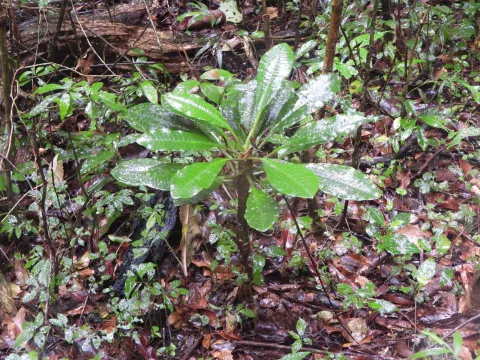
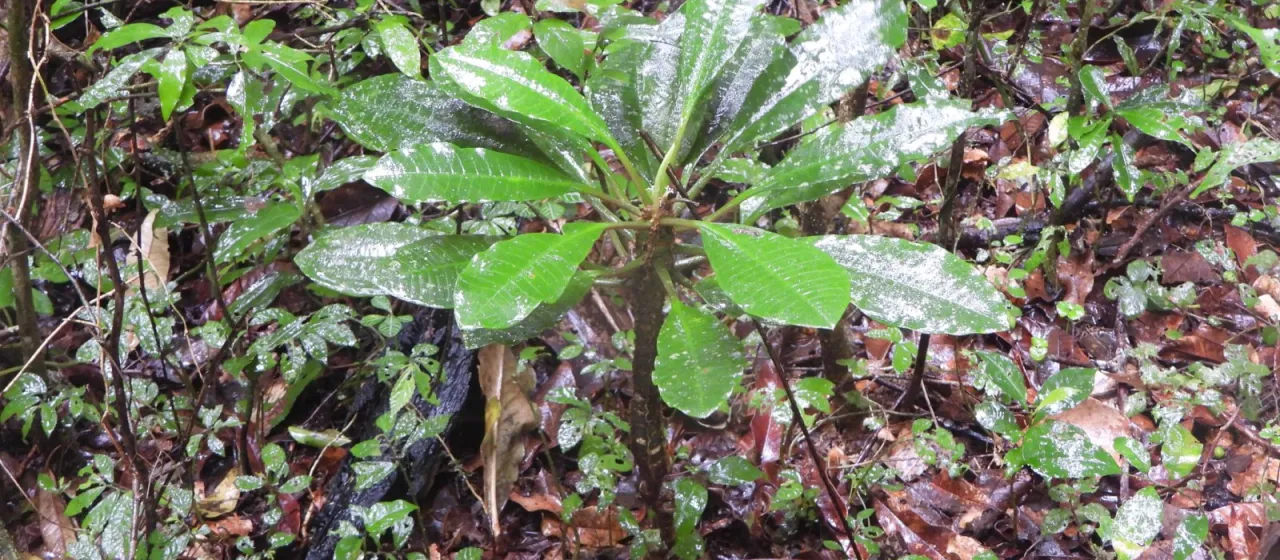
Madagascar jewel (Euphorbia leuconeura) is a perennial succulent plant within the Euphorbiaceae family. It is widely recognized for its unique, palm-like appearance, featuring a distinctly ridged stem and large, prominently veined leaves that emerge from the top of the plant.
Native to the island of Madagascar, this species typically thrives in tropical forest environments. As a cultivated crop, it has become a popular houseplant worldwide, valued for its ornamental appeal and its relatively robust nature compared to other exotic succulent species.
Botanically, the plant is characterized by its ability to store water in its stem, allowing it to survive periods of drought. A remarkable biological feature is its seed dispersal mechanism; the seed capsules burst when ripe, firing seeds several feet away from the parent plant, which is why it often colonizes nearby pots.
Cultivation requirements involve providing bright, indirect sunlight and a well-draining potting medium. The soil should be kept lightly moist during the growing season but allowed to dry out significantly during the dormant winter months. It is not cold-hardy and must be protected from temperatures below 15°C.
In terms of usage, the plant serves primarily as an ornamental specimen for indoor horticulture. Owners must handle the plant with care, as it contains a milky, toxic latex sap that can cause severe irritation upon contact with skin or mucous membranes. It is resistant to many pests but requires vigilance against mealybugs.
- Light requirements: Bright indirect light
- Watering: Moderate, let soil dry between waterings
- Propagation: Seeds or cuttings
- Main pests: Mealybugs, spider mites
- Safety note: Contains toxic latex sap
Photo gallery