
Description
Euphorbia lurida is a perennial herbaceous plant belonging to the Euphorbiaceae family. It is recognized as a hardy species capable of thriving in harsh environmental conditions, making it a subject of interest for agricultural practices focused on arid and semi-arid land utilization.
Originating from Mediterranean climates, the species is naturally adapted to rocky and well-drained habitats. Its evolutionary history has endowed it with high resistance to water stress, allowing it to maintain metabolic stability when other cultivars fail due to prolonged drought or nutrient-poor soils.
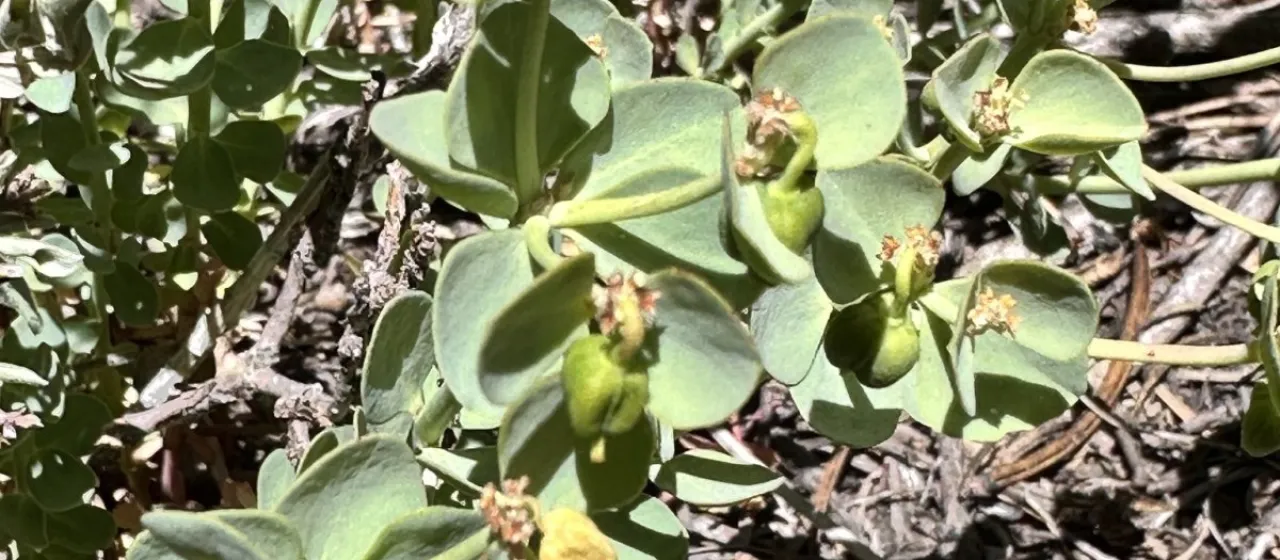
Botanically, Euphorbia lurida is defined by its latex-rich vascular system and succulent-like structure. The plant exhibits erect stems and foliage protected by a specialized cuticle layer. Its reproductive organs are arranged in cyathia, which are typical for the genus and provide a distinct yellowish-green appearance during the active growth phase.
Agrotechnical requirements focus primarily on soil drainage and thermal management. The crop requires low moisture levels to prevent root rot, which is the most significant physiological disorder in commercial plots. Cultivation on sloped terrain is often preferred to naturally assist in water runoff and prevent the accumulation of moisture near the root collar.
The economic utility of the crop spans from medicinal research to sustainable landscape management. Like many other members of the family, it requires monitoring for pests such as scale insects and mites. Effective pest management involves integrated strategies that prioritize the plant's natural defenses while ensuring optimal soil structure and site hygiene.