Description
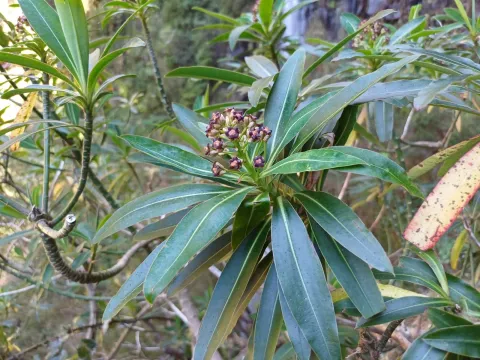
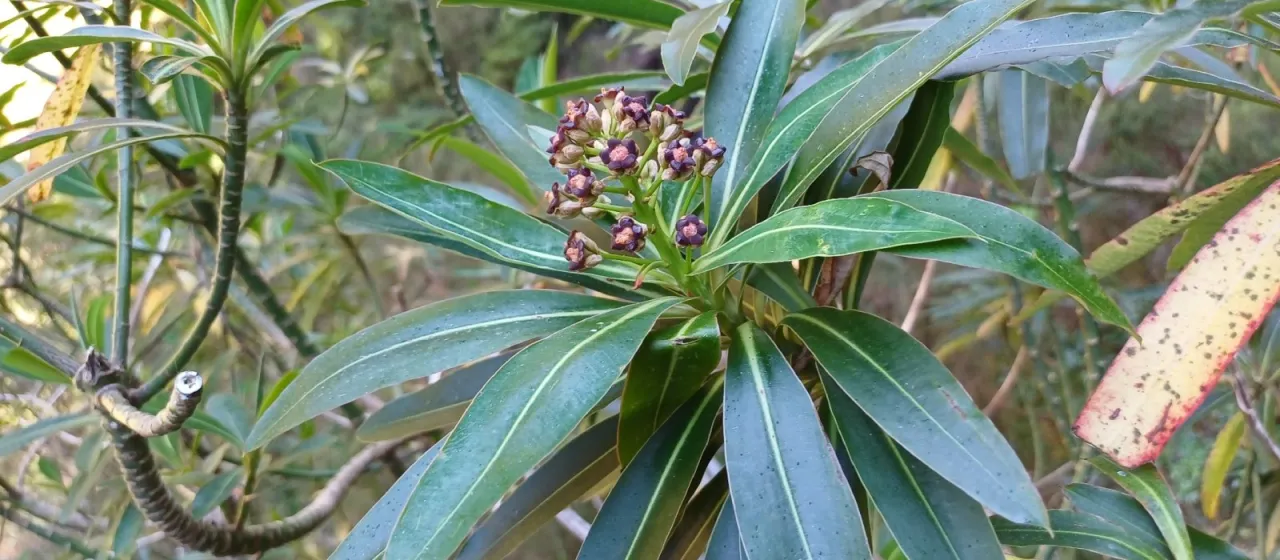
Honey spurge (lat. Euphorbia mellifera) is a distinctive evergreen shrub belonging to the Euphorbiaceae family. This robust plant is well-regarded for its large, tropical-looking foliage and its honey-scented flowers, which provide a sweet fragrance in the garden during the spring season. It is a prized specimen for its architectural habit and rapid growth rate in suitable environments.
Native to the Canary Islands and Madeira, this plant thrives in mild, Mediterranean-like climates. It has adapted to rocky, well-draining soils and typically grows on mountain slopes. When cultivated in agricultural or landscaping settings, it requires locations that offer protection from harsh frosts and cold winds, as its hardiness is limited compared to other spurge varieties.
The botanical structure of Euphorbia mellifera features long, lanceolate leaves with a prominent light-colored midrib, giving the foliage a lush appearance. The flowers are arranged in large, terminal clusters and are characterized by their honey-like scent and nectar production. Like all members of the Euphorbia genus, the plant contains a caustic milky latex, which serves as a natural defense mechanism and necessitates careful handling.
Agronomic success depends on soil management; the plant demands excellent drainage to prevent root rot, which is the most common cause of failure in cultivation. It prefers sunny to semi-shaded exposures. Fertilization should be kept to a minimum, focusing on balanced nutrients applied in early spring to encourage healthy vegetative growth without causing weak, elongated stems that are prone to damage.
In terms of хозяйственное (economical/utility) use, the plant is a classic choice for nectar-rich gardens and architectural landscaping. It provides an excellent early-season food source for bees. Common phytosanitary issues include root pathogens triggered by overwatering and infestations of pests like spider mites or mealybugs, which are more common in greenhouse or container-grown specimens.
- Needs a sheltered spot to prevent winter frost damage.
- Requires annual pruning after flowering to maintain a compact form.
- Propagation via softwood cuttings is the most effective method.
Photo gallery