Description
Myrtle spurge (Latin: Euphorbia myrsinites) is a perennial succulent plant that belongs to the family Euphorbiaceae. Recognized for its unique trailing habit, this species is frequently cultivated as a drought-tolerant groundcover in arid and semi-arid horticultural environments.
The native range of this plant includes the Mediterranean region, the Caucasus, and parts of Turkey. It has evolved to thrive in rocky, calciferous, and nutrient-poor soils, making it highly resilient to harsh environmental conditions that would be unsuitable for more traditional agricultural crops.
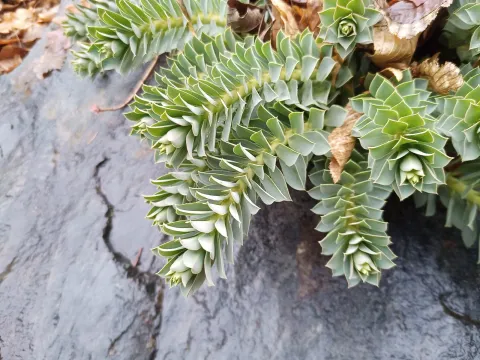
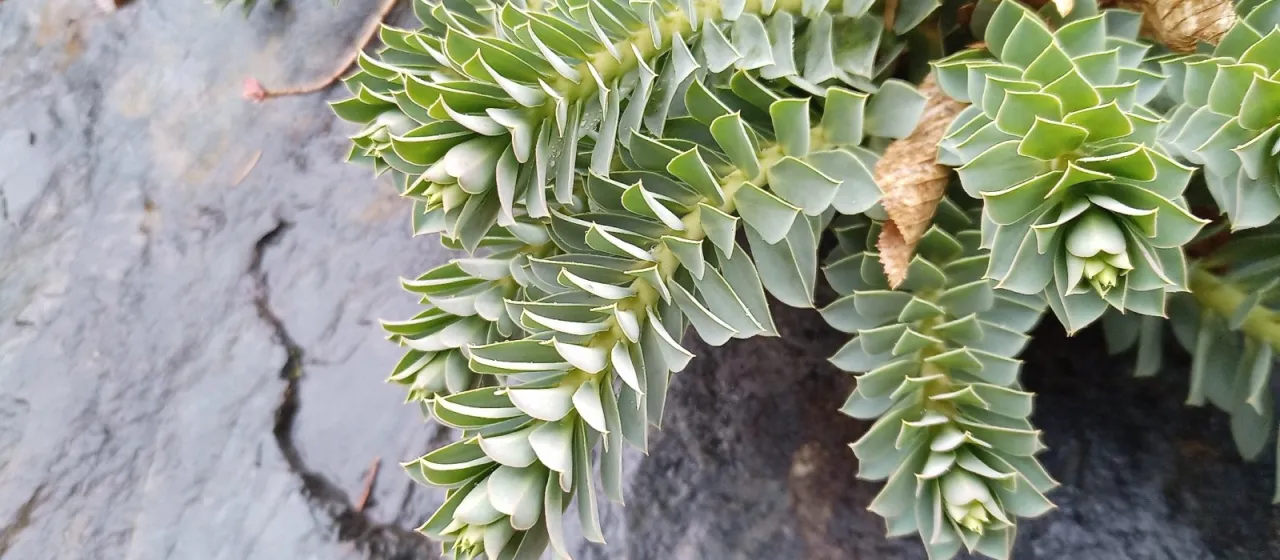
Botanically, it is characterized by succulent, blue-green spirally arranged leaves that provide year-round interest. During the spring, the plant produces distinctive chartreuse-yellow bracts, which are technically modified leaves surrounding the tiny flowers, creating a visually striking display.
Agronomic requirements for successful cultivation emphasize the necessity of well-draining soil and a sunny exposure. While it is highly adaptable, the primary limiting factor in its development is moisture management; excessive soil dampness or poor drainage can quickly lead to root rot or pathogen infestation.
In terms of хозяйственное (economic) use, the plant is primarily cultivated for rock gardens, dry slopes, and xeriscaping projects. Because it contains a caustic, milky sap, it is naturally resistant to most grazing animals and garden pests, though handlers must exercise caution to prevent skin contact.
- Excellent drought tolerance once established.
- Adaptability to a wide range of alkaline soil types.
- Requires little to no fertilization or supplemental irrigation.
- Self-seeding capacity in favorable ecological conditions.
Photo gallery