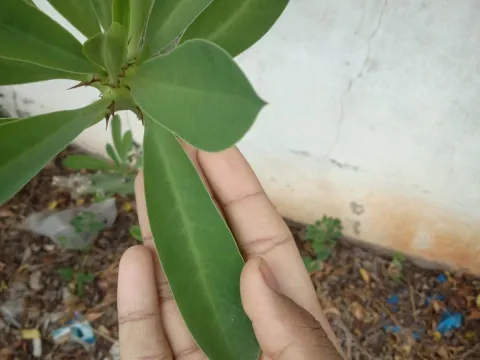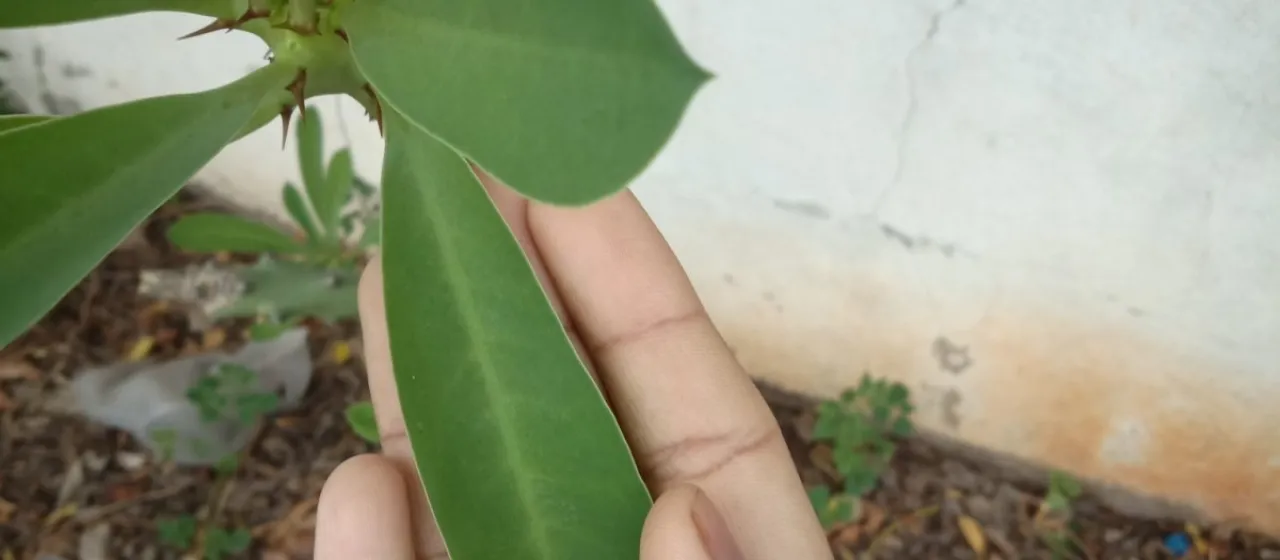
Description
Oleander spurge (Euphorbia neriifolia) is a perennial succulent shrub belonging to the Euphorbiaceae family. It is recognized for its robust, branched, and fleshy stems that typically feature prominent ridges and pairs of sharp thorns. This species is highly valued for its structural beauty and resilience in hot climates.
The plant originates from India and other parts of Southeast Asia, thriving in arid and rocky habitats. Its natural distribution spans tropical regions where it is often utilized as a natural barrier or hedge. The species is well-adapted to environments with prolonged dry seasons, making it a reliable crop for xeriscaping and sustainable agriculture in specific zones.
Botanically, it features large, alternate leaves that drop during the dry season, leaving distinct scars on the stems. The plant produces small cyathia (inflorescences) with yellowish flowers during the growing phase. Like many other members of the genus, it produces a toxic, milky latex that acts as a deterrent against herbivores and pathogens.
Cultivation requires well-draining, sandy soils and full sun exposure. It is crucial to prevent waterlogging, as the root system is highly susceptible to rot under excessive moisture conditions. The plant is drought-tolerant but performs best when provided with periodic, measured irrigation during the active growth season and kept in warm environments above 20°C.
Key хозяйственное uses of the plant include:
- Living fences for livestock containment and property borders.
- Ornamental use in succulent gardens and arid landscape design.
- Potential use in the pharmaceutical industry due to the biochemical properties of its latex.
- Soil stabilization in sandy and degraded areas.
The main phytosanitary risks include root and stem rot caused by poor soil drainage and high humidity. Common pests affecting this culture are mealybugs and spider mites, which can proliferate in poorly ventilated or excessively dry conditions. Proper site selection, careful irrigation, and regular monitoring are essential for maintaining plant health and productivity.
Photo gallery