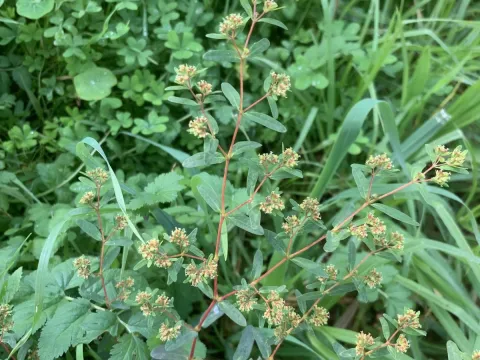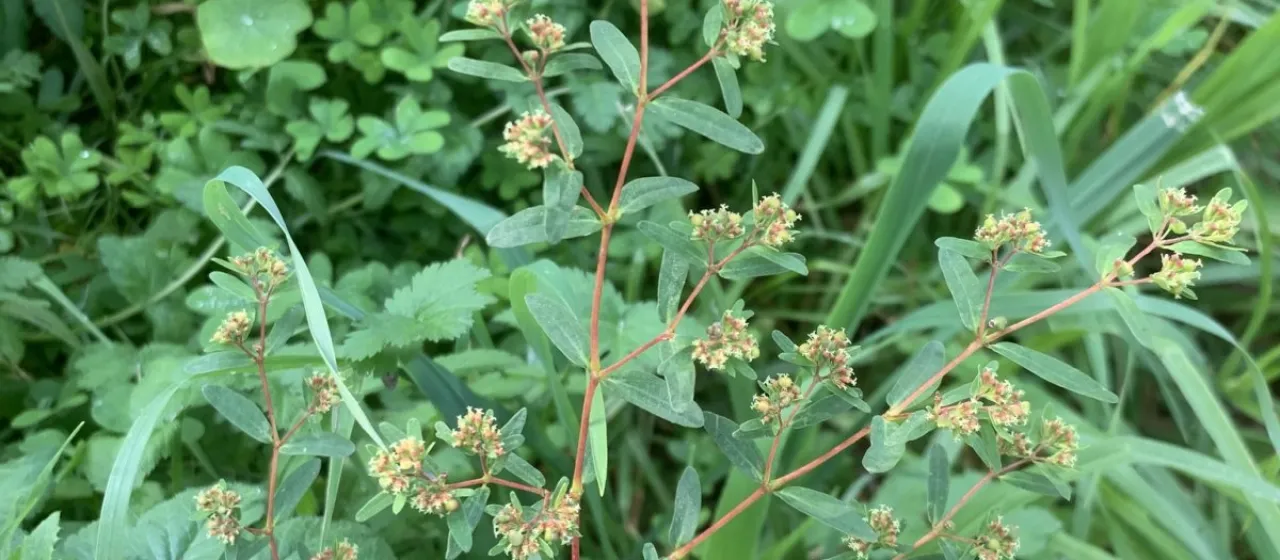
Description
Eyebane (Latin Euphorbia nutans), also commonly known as nodding spurge, is an annual herbaceous plant belonging to the Euphorbiaceae family. In agricultural settings, it is recognized as a troublesome weed that can invade various crop fields. Its presence is particularly problematic in row crops where it competes aggressively for space, nutrients, and water, significantly impacting yield potential.
The plant is native to North America but has achieved a global distribution due to its robust ability to colonize disturbed soils. It is frequently found in arable fields, pastures, and orchards worldwide. Its range is continuing to expand, often facilitated by human activities such as movement of machinery and contaminated seeds across various agricultural zones.
Botanically, Euphorbia nutans typically reaches heights of 20 to 60 centimeters, featuring branching, often reddish stems. The leaves are opposite and oblong, sometimes marked with a distinctive purple spot. The plant produces small, inconspicuous cyathia flowers. A defining characteristic is its white, milky latex sap, which is known to be toxic to livestock and can cause irritation upon contact with human skin.
Regarding climate and soil requirements, this species thrives in warm, moist, and well-drained soils. It exhibits a high tolerance for varied soil pH levels but prefers nitrogen-rich environments commonly found in fertilized croplands. Effective agronomic control necessitates a comprehensive approach, including competitive planting, systematic crop rotation, and the judicious use of pre-emergent and post-emergent herbicides to manage population density.
The host range of typical diseases affecting Eyebane is limited, with some fungal pathogens (such as rusts) occasionally infecting the foliage, though rarely to the extent of natural eradication. Economically, the weed is primarily managed through mechanical cultivation and chemical intervention. Farmers should prioritize keeping seed banks low by preventing the plant from setting seed, as a single plant can produce a substantial number of seeds annually.
Photo gallery