Description
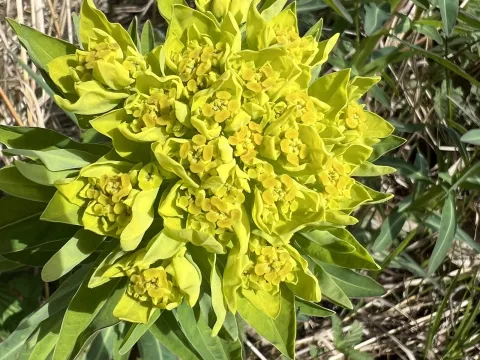
Marsh spurge (Euphorbia palustris) is a robust perennial herb belonging to the Euphorbiaceae family. In horticultural practice, this plant is highly valued for its ability to thrive in permanently moist or wet soil conditions, making it an excellent choice for stabilizing pond edges and bog gardens where other species struggle to establish.
The species is native to Europe and Western Asia, where it naturally occurs in floodplains, marshes, and damp meadows. Its wide distribution and adaptability have made it a staple in landscape architecture for wetland restoration and ornamental water feature surroundings. It is a hardy plant capable of enduring harsh winters within its temperate native range.
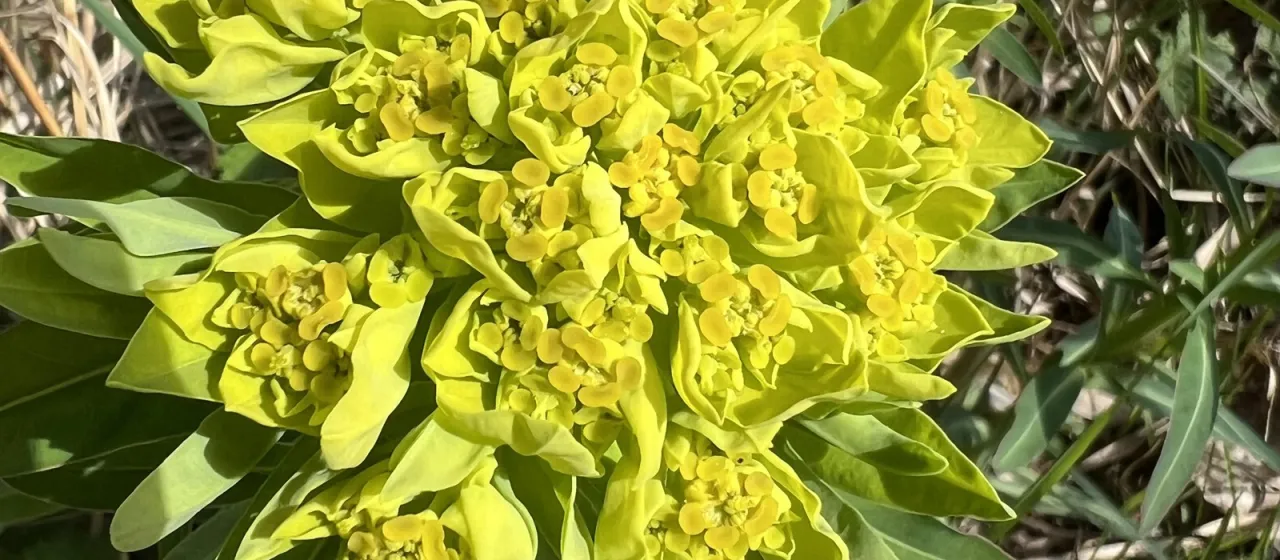
Botanically, this plant is characterized by its tall, sturdy stems reaching up to 1.5 meters, adorned with lanceolate leaves that turn a striking yellow-orange in the autumn. Its flowering display in late spring features large, brilliant yellow bracts. The structure of the plant provides architectural form and vertical interest in garden beds throughout the growing season.
Cultivation requirements focus on moisture retention and sunlight. While it can tolerate partial shade, the marsh spurge performs best in full sun, provided the soil remains consistently damp. A maintenance routine should involve regular watering during dry spells and organic mulching, which helps mimic the plant’s natural habitat and maintains soil structure.
- Requires moisture-retentive, fertile soil for optimal growth.
- Benefits from occasional pruning of faded stalks after flowering.
- Can be propagated by division in early spring or autumn.
- Resistant to most garden pests, but monitoring for aphids is advised.
Despite its ornamental value, growers must be aware that, like other members of the genus Euphorbia, it produces a milky latex sap that is toxic and can cause skin irritation. Proper protective equipment should always be worn during handling. Its primary use remains as a decorative perennial in water-adjacent landscapes rather than as a traditional food crop.
Photo gallery