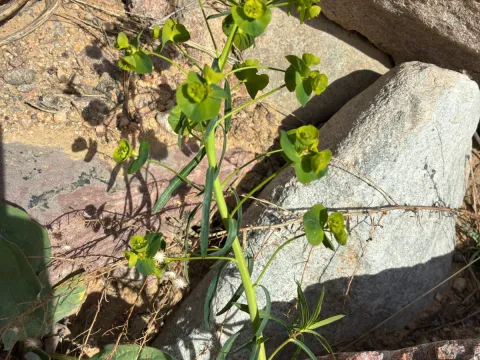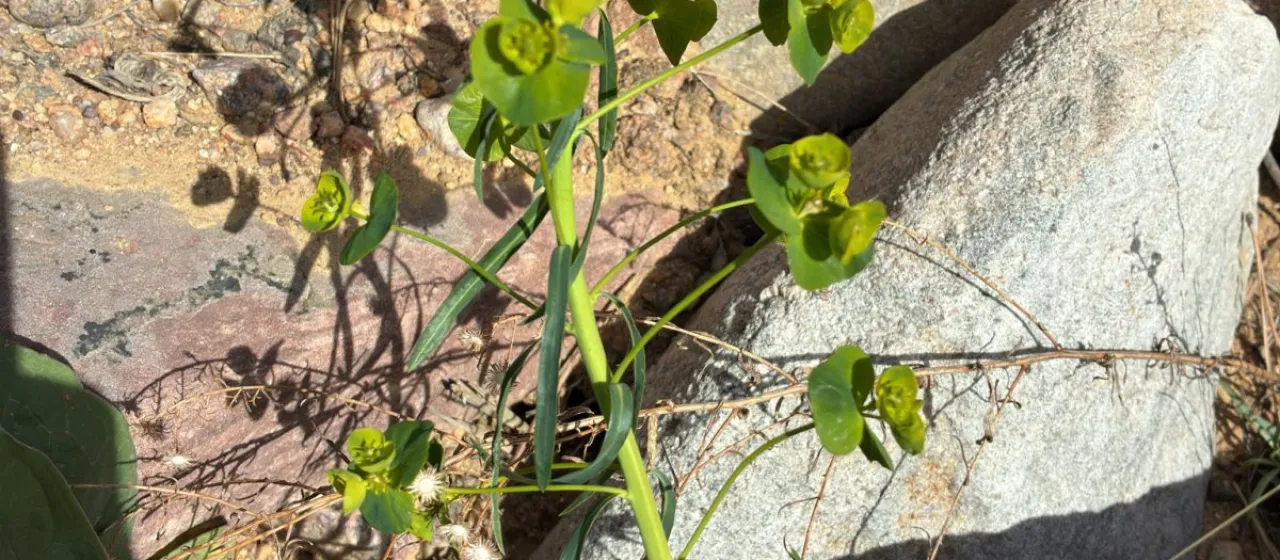
Description
Leafy spurge (Euphorbia pseudovirgata) is a perennial herbaceous plant belonging to the Euphorbiaceae family. Within the agricultural sector, it is primarily recognized as a persistent and invasive weed capable of causing significant economic loss by displacing forage crops and reducing the grazing capacity of pastures through its competitive growth.
Native to Eurasia, this species has successfully colonized diverse environments, including temperate grasslands, roadsides, and abandoned fields. Its evolutionary success is attributed to its wide ecological amplitude, allowing it to thrive in various soil textures, from sandy to loamy soils, and to tolerate both drought and periodic waterlogging.
The morphology of this plant is defined by its deep, extensive root system, which can reach several meters in depth, and its dense, leafy stems. A characteristic trait is the production of white, milky latex, which contains toxic compounds that protect the plant from herbivory and can cause health issues in livestock if ingested in large quantities.
Effective management requires an integrated approach to agronomy. Due to its vigorous vegetative propagation via root buds, simple mechanical disturbance is often insufficient and may even exacerbate the spread. Integrated pest management (IPM) strategies typically combine strategic grazing, herbicide application, and long-term land restoration techniques to minimize the competitive pressure on cultivated crops.
- Extensive underground root system with high regenerative capacity.
- High tolerance to environmental stressors and poor soil quality.
- Reproduction via both seeds and vegetative crown/root buds.
- Potential toxicity to livestock due to terpenoid compounds.
The plant is susceptible to various fungal pathogens, such as rusts and mildews, which have been studied as potential biological control agents. Monitoring for pests like flea beetles, which are specialized predators of the Euphorbia genus, is also common practice in regions where the control of this invasive species is a priority for land sustainability.
Photo gallery