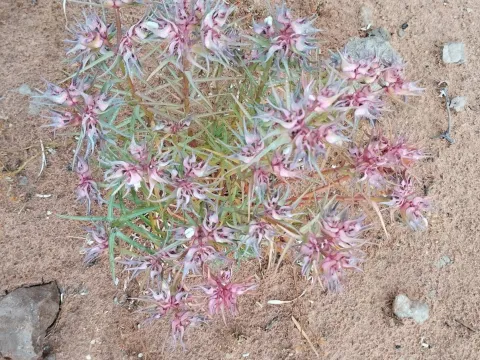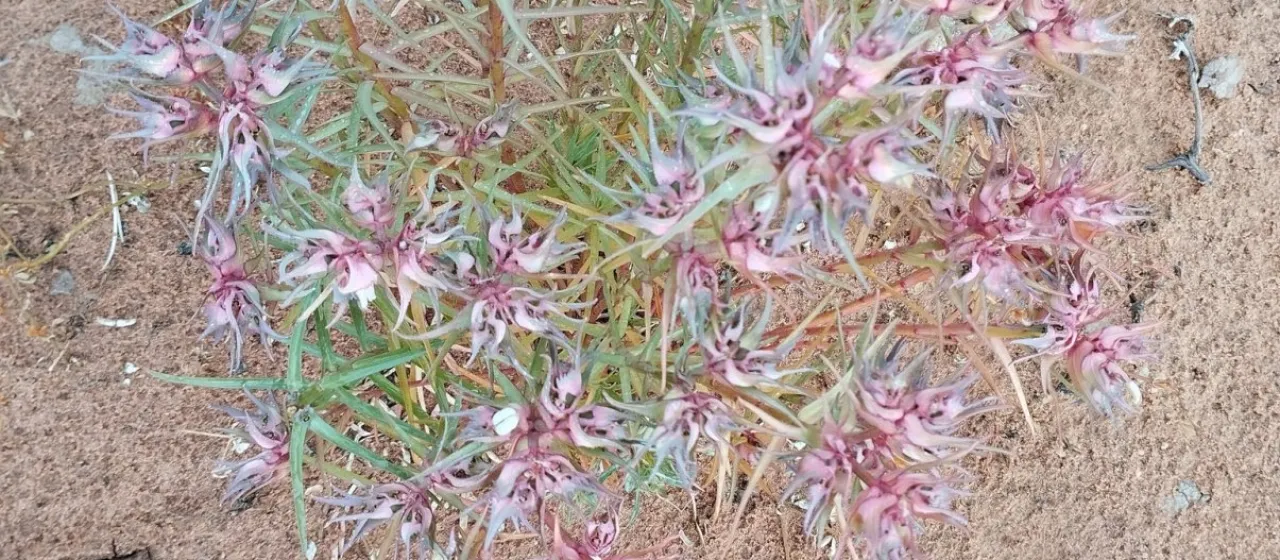
Description
Euphorbia retusa is a perennial herbaceous plant belonging to the large and diverse family Euphorbiaceae. Known for its specific leaf morphology, this species is a true succulent adapted to harsh, arid environments. It is scientifically significant due to its specialized physiological mechanisms that allow it to survive in regions with minimal rainfall and extreme solar radiation.
The plant originates from the arid regions of North Africa and parts of the Mediterranean basin. In its natural habitat, it thrives in sandy and rocky soils where other vegetation struggles to survive. Its distribution is closely linked to its ability to manage water intake through a deep, highly efficient root system that reaches subsurface moisture levels.
Botanically, the species is recognized by its succulent stems and retuse leaves, which possess a small notch at the apex. Like most members of the Euphorbia genus, it features specialized flower structures known as cyathia. The presence of a milky, acrid sap is a defining characteristic, serving as a biological deterrent against grazing animals and pests.
Agricultural success with Euphorbia retusa requires strict adherence to xerophytic cultivation practices. The plant demands a substrate with excellent drainage, typically a mix of sand, gravel, and minimal organic matter. Soil aeration is critical; heavy clay or compacted soils are generally unsuitable as they lead to root rot. High exposure to direct sunlight is mandatory for healthy development.
Regarding its utility, the plant is primarily studied for its potential in soil stabilization and desertification prevention. In botanical horticulture, it is valued as an ornamental specimen for xeriscaping. Common pests include spider mites and mealybugs, which are manageable with careful monitoring. Fungal diseases, particularly stem rot, are the most frequent health challenges, usually caused by overwatering or poor ventilation.
Photo gallery