Description
Gopher spurge (Euphorbia rigida) is a distinctive perennial plant belonging to the Euphorbiaceae family. Known for its architectural silhouette and remarkable resilience, this species is highly valued in dryland agriculture and sustainable landscaping as a low-maintenance, drought-hardy ground cover.
Native to the Mediterranean region and the Middle East, the plant has evolved to thrive in harsh, rocky, and arid environments. Its natural habitat includes open stony slopes and limestone-rich soils, which dictates its preference for well-drained growing media when introduced into cultivated settings.
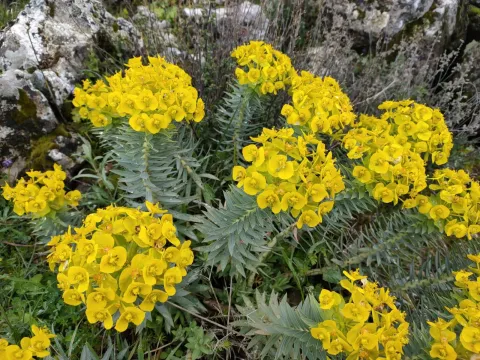
Botanically, Euphorbia rigida is characterized by its succulent-like, fleshy, blue-green foliage arranged in a spiral pattern along the stems. In early spring, the plant produces impressive, long-lasting inflorescences with chartreuse-yellow bracts. This visual display, combined with its compact, mounded growth habit, makes it a preferred choice for xeriscaping.
To ensure successful cultivation, agronomic management should focus on replicating the plant's natural arid conditions:
- Soil: Requires sandy or gritty soil with excellent drainage; intolerant of waterlogged sites.
- Sunlight: Thrives in full sun; growth becomes leggy in shaded environments.
- Watering: Highly drought-tolerant once established; requires little to no irrigation in most climates.
- Maintenance: Annual cleanup involves cutting back spent flowering stems to encourage new, vigorous growth.
In terms of health management, the plant is naturally resistant to most pests due to the presence of caustic milky sap. However, in poorly drained or overly humid regions, root rot can become a significant issue. Occasionally, aphids may infest new growth, requiring minor intervention with standard pest control methods. Its robust nature makes it an excellent candidate for agricultural zones prone to water scarcity.
Photo gallery