Description
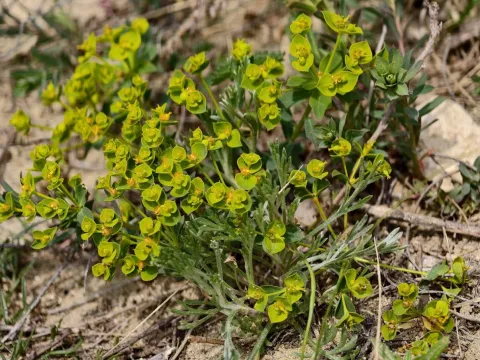
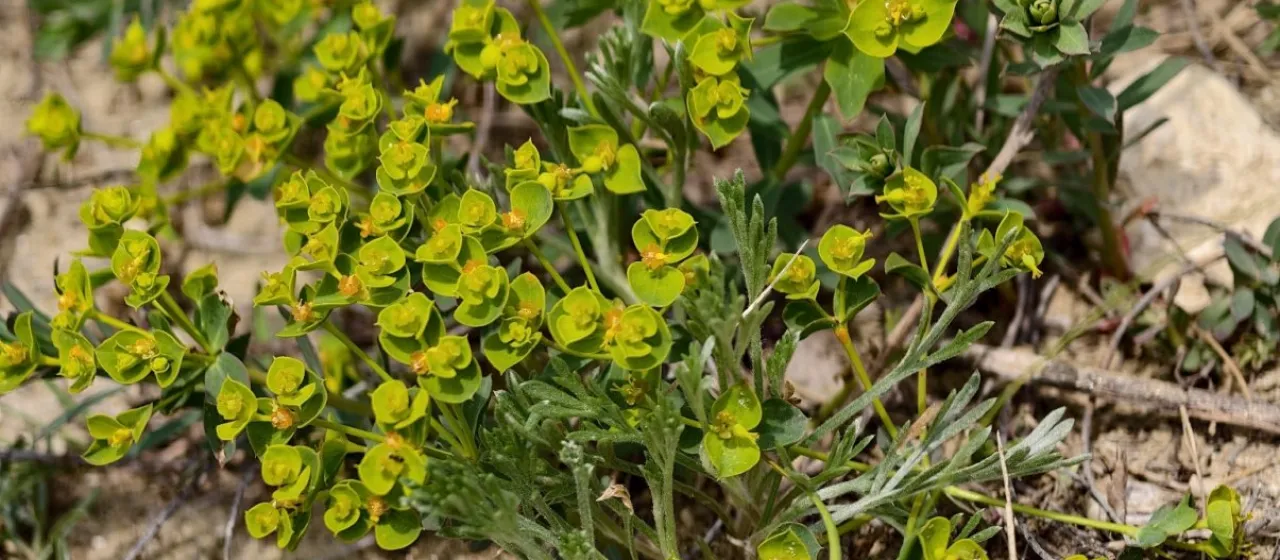
Seguier's spurge (Euphorbia seguieriana) is a perennial herbaceous plant belonging to the Euphorbiaceae family. This species is recognized for its high ecological plasticity, forming dense clumps with glaucous, narrow leaves that contribute to its distinctive appearance in both wild and cultivated landscapes.
The native distribution of this plant spans across Central and Southern Europe, extending into Western Asia. It typically thrives in steppes, dry grasslands, and rocky slopes. Its ability to tolerate extreme environmental conditions, such as high solar radiation and periodic droughts, makes it an excellent candidate for low-maintenance horticultural projects.
Botanically, the plant features a woody rootstock and stems that produce a milky latex, a signature trait of the genus. The inflorescences are characterized by yellow-green bracts surrounding the cyathia, which provide a vibrant visual display during the late spring blooming period. The entire structure of the plant is adapted to minimize water loss, which is a critical evolutionary advantage.
Agronomically, Seguier's spurge demands excellent drainage and minimal soil fertility. It thrives in neutral to slightly alkaline, stony, or sandy soils. Over-fertilization or excessive irrigation should be strictly avoided, as these practices can significantly weaken the root system and increase susceptibility to crown rot and other soil-borne diseases.
Regarding utilization, this spurge is primarily valued as an ornamental ground cover for xeriscaping, rock gardens, and dry borders. It serves as a resilient choice for areas where traditional water-intensive crops fail. While the plant is generally hardy, growers must be vigilant against pests like aphids and spider mites, and always handle the milky sap with care due to its potential for skin and eye irritation.
Photo gallery