Description
Creeping spurge (Euphorbia serpens) is a prostrate perennial herb belonging to the Euphorbiaceae family. While botanically significant for its unique structural adaptations, in an agricultural context, it is widely recognized as a persistent and invasive weed. The plant forms dense, low-growing mats that can cover extensive surface areas, effectively outcompeting desired crops.
Originally native to South America, creeping spurge has successfully naturalized across various global regions, including North America and parts of Europe and Asia. Its wide distribution is a testament to its ecological plasticity. It frequently establishes itself in agricultural fields, pastures, turf, and along irrigation ditches, often thriving in disturbed soils where native vegetation has been cleared.
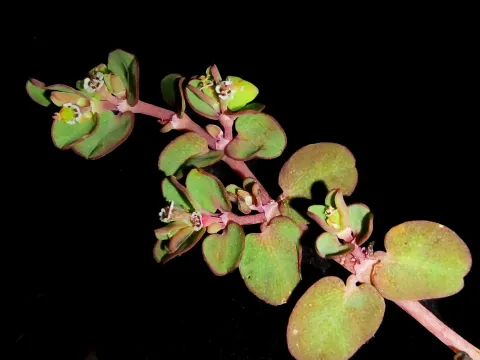
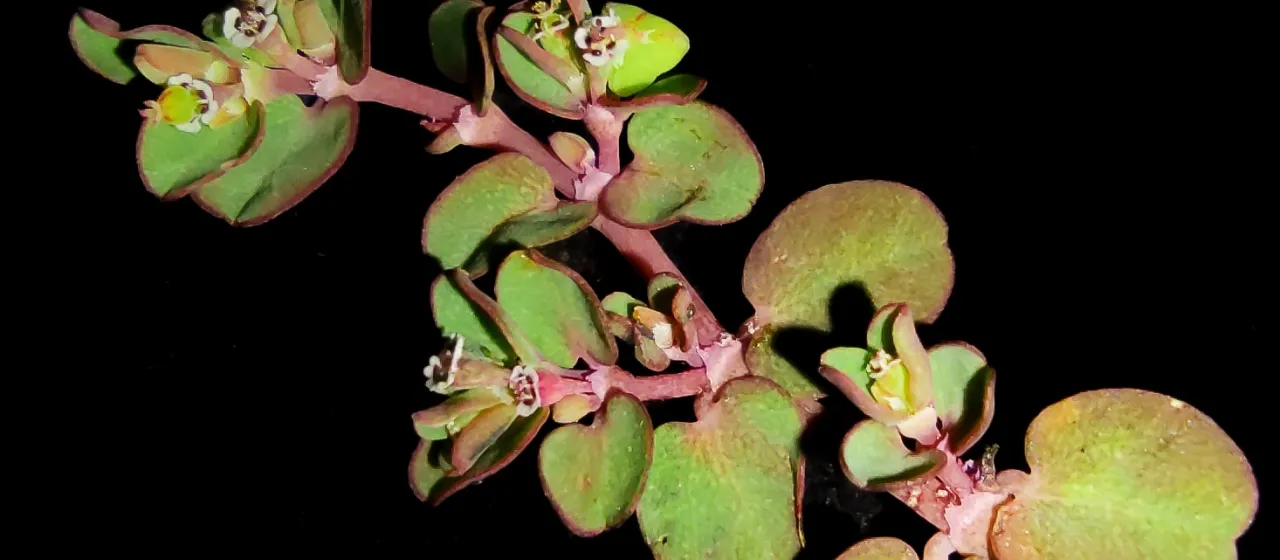
The morphology of Euphorbia serpens is specialized for survival. Its stems are slender, trailing, and capable of rooting at each node when in contact with moist soil. This allows the plant to form intricate networks that are difficult to eradicate manually. The leaves are small, opposite, and entire, often displaying a reddish or glaucous tint. Like other members of the genus, it produces a milky latex that acts as a deterrent to many herbivores due to its toxicity.
Regarding its requirements, creeping spurge thrives in well-drained, sandy, or disturbed soils. It is highly drought-tolerant, making it a formidable competitor in arid or semi-arid agricultural environments. It requires full sunlight for optimal growth and can rapidly colonize bare soil patches. Management typically involves a combination of mechanical cultivation, mulching, and targeted herbicide application to prevent it from outcompeting seasonal crops.
From an agricultural standpoint, the plant poses several challenges for farm management:
- It competes intensely for water and nitrogen, reducing the yields of primary crops.
- Its ability to reproduce via stem fragments makes tillage potentially counterproductive if the soil is not thoroughly cleared.
- It can serve as a reservoir for certain plant-pathogenic fungi that affect agricultural produce.
- The presence of toxic latex limits its utility as fodder and poses health risks to grazing livestock if ingested in large quantities.
Photo gallery