
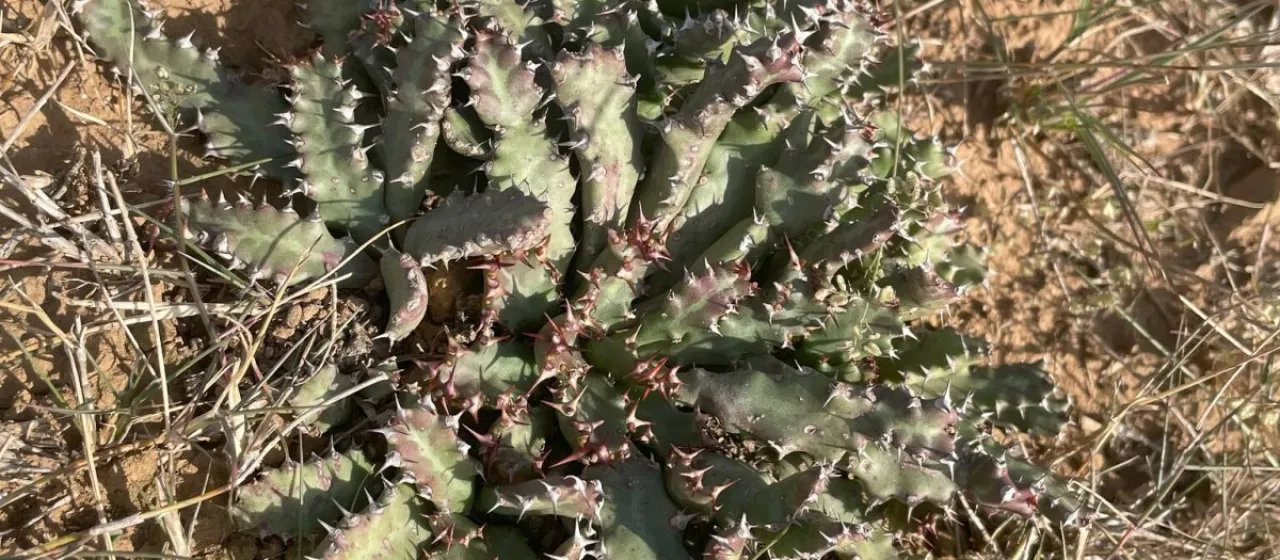
Description
Euphorbia stellata is a fascinating dwarf succulent species belonging to the Euphorbiaceae family. It is widely recognized for its distinctive, flattened caudex from which short, star-shaped, and flattened branches radiate, creating a unique appearance that makes it a prized specimen among succulent enthusiasts and botanical collectors.
Native to the Eastern Cape of South Africa, this species has evolved in arid, rocky environments. Its adaptation to harsh, dry conditions is reflected in its slow growth rate and the ability to store significant amounts of moisture in its succulent tissues. In its natural habitat, it thrives in well-drained, nutrient-poor rocky substrates exposed to intense sunlight.
Botanically, the plant contains a caustic milky sap, common to the genus, which serves as a defense mechanism against herbivores. The branches often feature subtle ribs and small, deciduous leaves that appear during the growing season. The plant's morphology is designed to minimize surface area exposed to the sun, thereby reducing water loss through transpiration.
Cultivation requires strict adherence to agricultural protocols suitable for arid-zone plants. A highly porous, mineral-based soil mix is mandatory to ensure rapid drainage. Sunlight must be bright and direct, but in greenhouse environments, light shading is often used during the hottest hours to prevent sunburn. Watering should be infrequent, and the soil must be allowed to dry out completely between sessions.
In terms of хозяйственное (economic/practical) use, Euphorbia stellata is strictly an ornamental plant. It does not have agricultural value in the sense of food or fiber production but holds significant value in the nursery trade and horticulture. Growers should be wary of mealybugs and spider mites, and they must be vigilant regarding overwatering, which is the primary cause of plant loss in this species.