
Description
Spotted spurge (Euphorbia supina) is an annual herb belonging to the Euphorbiaceae family. In agriculture, it is recognized as a troublesome weed that thrives in disturbed soil, frequently invading crop fields, nurseries, and managed landscapes where it competes with essential crops for soil nutrients and moisture.
The plant is native to North America but has become naturalized across many regions of the world, including parts of Europe and Asia. Its expansion is largely attributed to its ability to tolerate heat and drought, as well as its opportunistic growth pattern in areas where soil surfaces remain exposed for extended periods during the growing season.
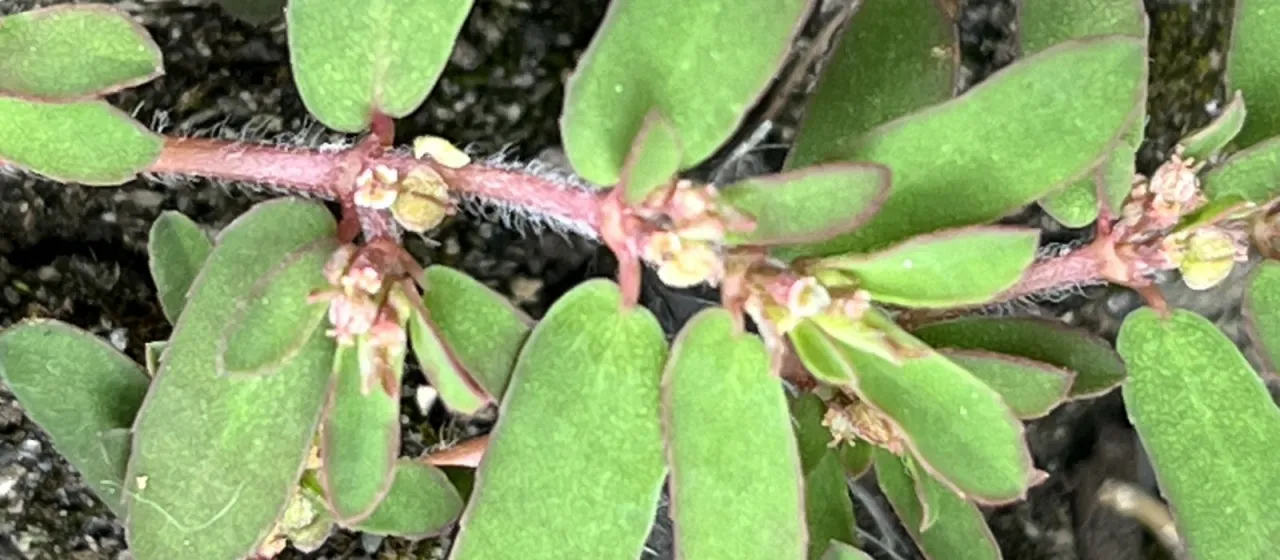
Morphologically, Euphorbia supina is characterized by its prostrate, mat-forming growth habit. The stems are typically branched and radiate from a central taproot. The leaves are small and opposite, often exhibiting a distinctive reddish-purple blotch at the center, which serves as a key identifying feature. Like other members of the spurge family, it produces a milky latex sap that is toxic if ingested and can cause skin irritation.
From an agronomic perspective, managing spotted spurge requires a multi-faceted approach. Because it produces a large number of seeds that can remain viable in the soil for years, relying solely on physical removal is rarely sufficient. Effective management involves maintaining dense crop canopies to shade out the weed, along with the precise application of pre-emergence and post-emergence herbicides suited for specific crop rotations.
The economic impact of this weed is significant, particularly in specialty crops and row-crop farming. Beyond direct yield reduction, it often serves as a host for various plant pathogens and pests. To mitigate these risks, farmers must implement stringent weed monitoring, consistent soil preparation, and integrated pest management practices to prevent the weed from establishing a competitive dominance in the field.