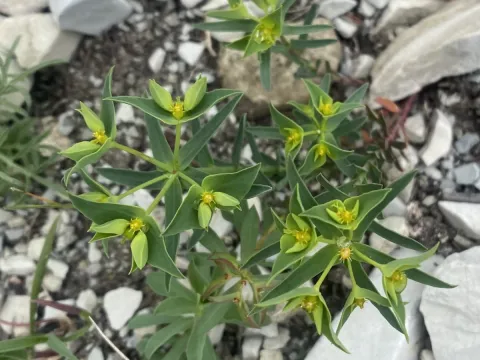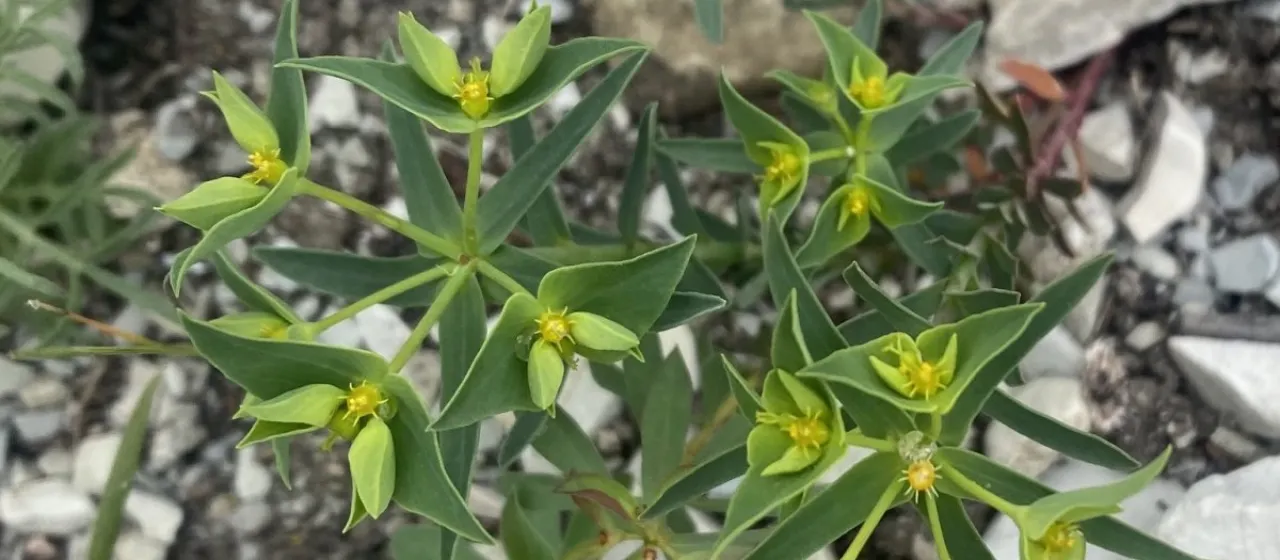
Description
Taurinensis spurge (Latin Euphorbia taurinensis) is an annual herbaceous plant belonging to the diverse Euphorbiaceae family. While not a conventional field crop, it is of significant interest in agricultural botany due to its prevalence in rural environments and its ability to act as a competitive species within various cropping systems.
The plant originates from Southern and Central Europe, with its native range extending into Mediterranean ecosystems. It has successfully adapted to human-disturbed landscapes, frequently colonizing arable land, pastures, and roadsides. Its expansion is largely driven by its high seed production capacity and efficient dispersal mechanisms in temperate climates.
Botanically, this species is characterized by its slender, erect stems and distinct leaves that are typically lanceolate. A definitive morphological trait, consistent with its family, is the presence of white milky latex in all tissues. Its reproductive structure, the cyathium, is complex, facilitating successful pollination even in varying environmental conditions.
From an agricultural standpoint, managing Euphorbia taurinensis requires attention to soil composition, as it thrives in well-drained, nutrient-rich soils. Effective control strategies involve integrated pest management, including deep tillage, competitive planting, and the judicious use of selective herbicides aimed at suppressing vegetative growth before the flowering stage.
The plant can harbor specific pests and diseases, including rusts and powdery mildew, which can potentially impact adjacent agricultural crops if left unchecked. Furthermore, because the latex contains diterpene esters, it poses a risk of toxicity to livestock if present in significant quantities in hay or silage, necessitating careful management in fodder production areas.
Photo gallery