
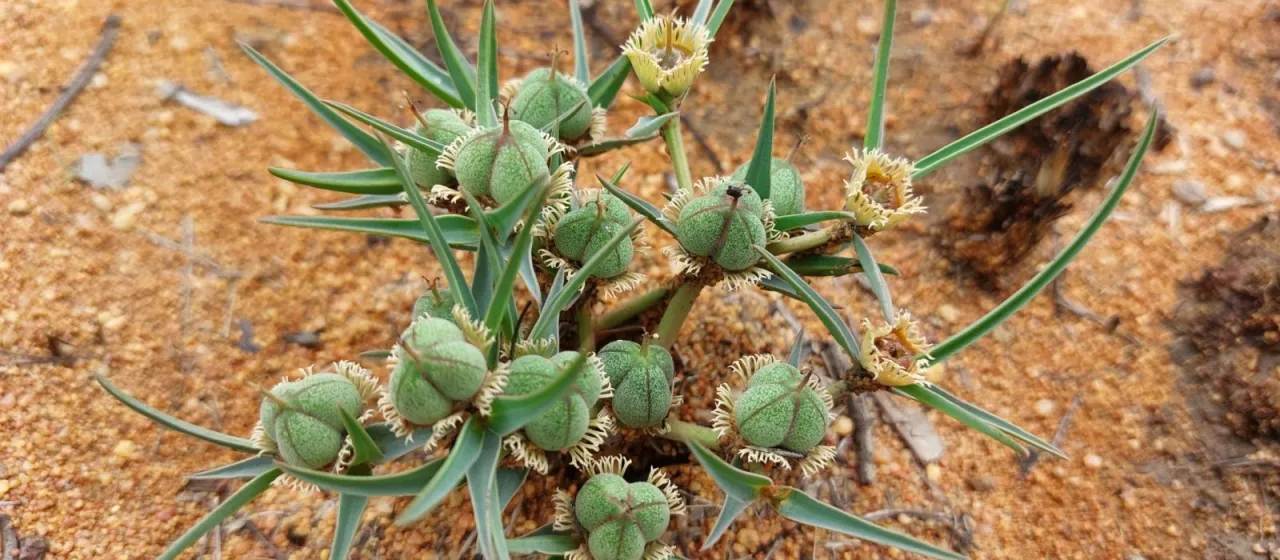
Description
Euphorbia trichadenia is a fascinating succulent species belonging to the Euphorbiaceae family. It is widely recognized for its prominent caudex, a thickened, fleshy stem base that acts as a water storage organ. This biological adaptation allows the plant to thrive in arid environments where water availability is sporadic and unpredictable.
The native distribution of this species is centered in various regions of Africa. It naturally inhabits rocky slopes and well-drained terrains, which has dictated its physiological requirements for cultivation. In the world of horticulture, it is highly valued by specialized collectors for its unique morphological structure and its ability to go through distinct seasonal dormancy cycles.
Botanically, the plant is characterized by its deciduous nature, often shedding its stems and leaves during the dry season. The leaves are typically lanceolate and may exhibit varying degrees of pubescence. The inflorescences, known as cyathia, are small and reflect the complex floral structure characteristic of the Euphorbia genus, though they are primarily of botanical interest rather than ornamental.
Cultivation requires careful attention to environmental parameters. The plant thrives under bright, filtered light and requires a highly porous, inorganic substrate to ensure rapid drainage. Overwatering is the most common cause of failure, especially during the dormancy phase when the plant requires very little moisture to survive until the next growing season.
- Light: Full sun to bright indirect exposure.
- Soil: Mineral-based mix with pumice, perlite, and coarse sand.
- Watering: Deep watering during the growing period, completely dry during dormancy.
The primary use of Euphorbia trichadenia is ornamental, specifically within the hobbyist and botanical garden sectors. Like many species within its genus, it contains a caustic, toxic latex that requires the use of gloves and caution during maintenance or propagation. Common pests include mealybugs and spider mites, which can be managed through regular monitoring and appropriate horticultural practices.