Euryops virgineus
Euryops virgineus (L. f.) DC.
Description
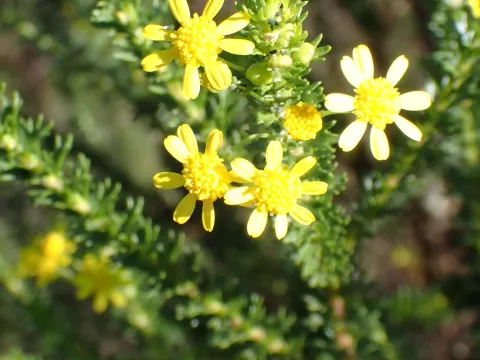
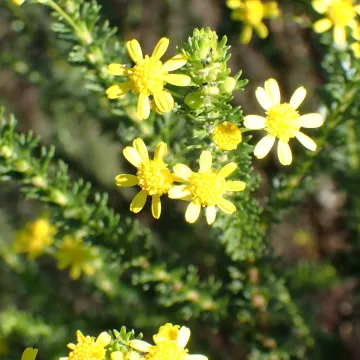
Euryops virgineus is an evergreen perennial shrub belonging to the Asteraceae family. It is widely recognized for its spectacular display of bright yellow, daisy-like flowers that bloom prolifically in late winter and early spring, effectively covering the foliage and providing an early-season color boost to gardens.
Native to the Cape region of South Africa, the plant is naturally adapted to a Mediterranean climate. This environment features cool, moist winters and warm, dry summers, which dictates the specific requirements for its cultivation in residential landscapes. It thrives in regions where frost is minimal or non-existent.
Botanically, the plant is characterized by its finely divided, needle-like foliage that remains dark green throughout the year. As a shrub, it can grow up to 1.5 meters in height, developing a dense, bushy structure. This growth habit makes it an excellent candidate for screening, hedging, or as a focal point in rock gardens.
To ensure successful cultivation, gardeners must prioritize excellent soil drainage, as the species is highly susceptible to root rot in waterlogged conditions. It requires a full sun position to maintain its compact shape and maximize flower production. Regular pruning immediately after the flowering season is highly recommended to promote dense branching and prevent the shrub from becoming leggy.
The primary agricultural and horticultural challenges involve monitoring for common pests like aphids and spider mites, especially in confined or poorly ventilated environments. Furthermore, maintaining balanced irrigation is key to avoiding fungal diseases. Despite these needs, its reliability and aesthetic value make it a favored choice among landscapers focusing on xeriscaping or Mediterranean-style gardens.
Photo gallery