Japanese Euscaphis
Euscaphis japonica (Thunb.) Kanitz
Description
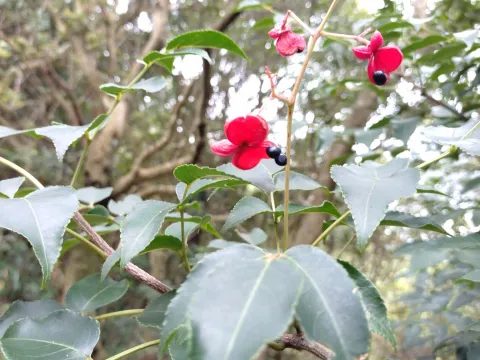
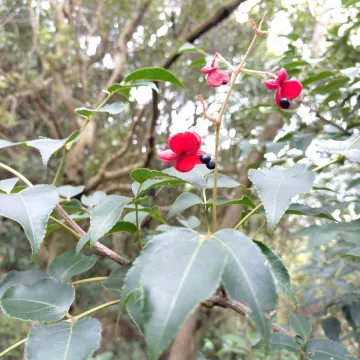
Japanese Euscaphis (Euscaphis japonica) is a deciduous shrub or small tree belonging to the Staphyleaceae family. It is widely recognized for its elegant foliage and distinct, showy fruit capsules that split open in autumn to reveal glossy, dark-colored seeds, making it a valuable addition to botanical collections.
The species is native to East Asia, including Japan, China, and Korea. In its natural habitat, it thrives in forested areas, adapting well to diverse soil conditions within its range. Gardeners appreciate this plant for its structural form and the seasonal interest it provides throughout the year.
Botanically, it features opposite, pinnately compound leaves and small, panicle-borne yellowish-white flowers. The fruit is a distinctive leathery capsule that turns bright red when mature. This contrast between the deep green foliage and the vivid fruit creates a striking visual display in the landscape.
Cultivation requires fertile, well-draining soil with an acidic to neutral pH level. While it prefers full sun to partial shade, it should be protected from harsh, drying winds. Maintenance involves regular irrigation during the establishment phase and minimal pruning to maintain a desirable tree-like or bushy shape.
- Thrives in humus-rich, moist, but well-drained soil.
- Excellent for attracting local fauna due to its seeds.
- Propagated primarily through seeds or semi-hardwood cuttings.
- Generally low-maintenance once fully established.
Beyond its ornamental use, Japanese Euscaphis has historically been utilized in traditional medicine within its native range. The bark and fruits have been studied for potential health benefits. Today, it serves mainly as a sophisticated specimen tree for gardens, providing both beauty and a unique biological presence.
Photo gallery