
Description
Euterpe edulis, commonly known as the Juçara palm, is a species of palm in the Arecaceae family. It is native to the Atlantic forest of South America and is widely recognized for its edible heart and antioxidant-rich fruits. Unlike some other Euterpe species, this palm has a single stem and does not produce offshoots, which necessitates sustainable harvesting practices.
The plant thrives in tropical climates with high humidity and significant annual rainfall. It typically grows in deep, nutrient-rich soils, often found in valleys and humid mountainous regions. The species is highly adapted to the understory of primary forests, making it an excellent candidate for agroforestry systems where it can grow in partial shade.
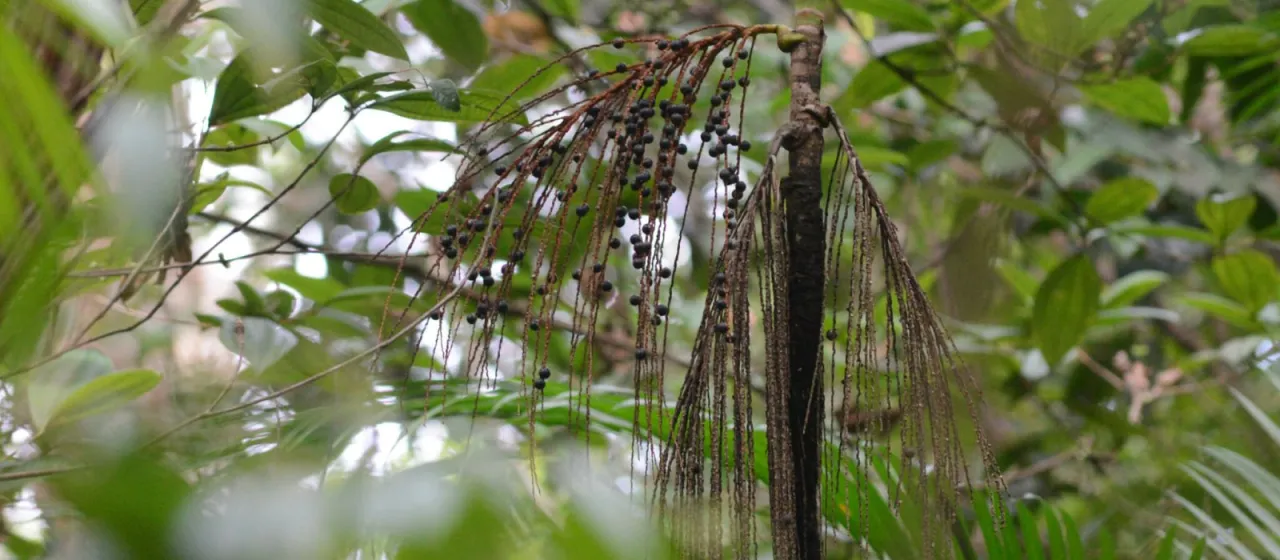
Botanically, the Juçara palm is characterized by a slender, straight, greyish trunk that can reach heights of up to 15 meters. The crown consists of elegant, feathery, dark green leaves. The palm produces clusters of small, round fruits that turn deep purple or black when fully mature, containing a small seed covered by a thin layer of pulp.
Cultivation practices require careful nursery management for the first two years, including shade regulation and consistent moisture. Soil preparation is critical, requiring organic matter amendments to ensure proper nutrient availability. Nitrogen, phosphorus, and potassium levels must be monitored to ensure vigorous growth, especially during the establishment phase on plantation sites.
Economically, the species is harvested for its heart of palm, which is considered a gourmet product, and its fruit, which is highly valued for its health benefits. However, the plant faces threats from pests such as palm borers and various fungal diseases that affect the crown and roots. Integrated pest management and proper canopy thinning are essential to mitigate these biological risks and ensure healthy crop yields.