
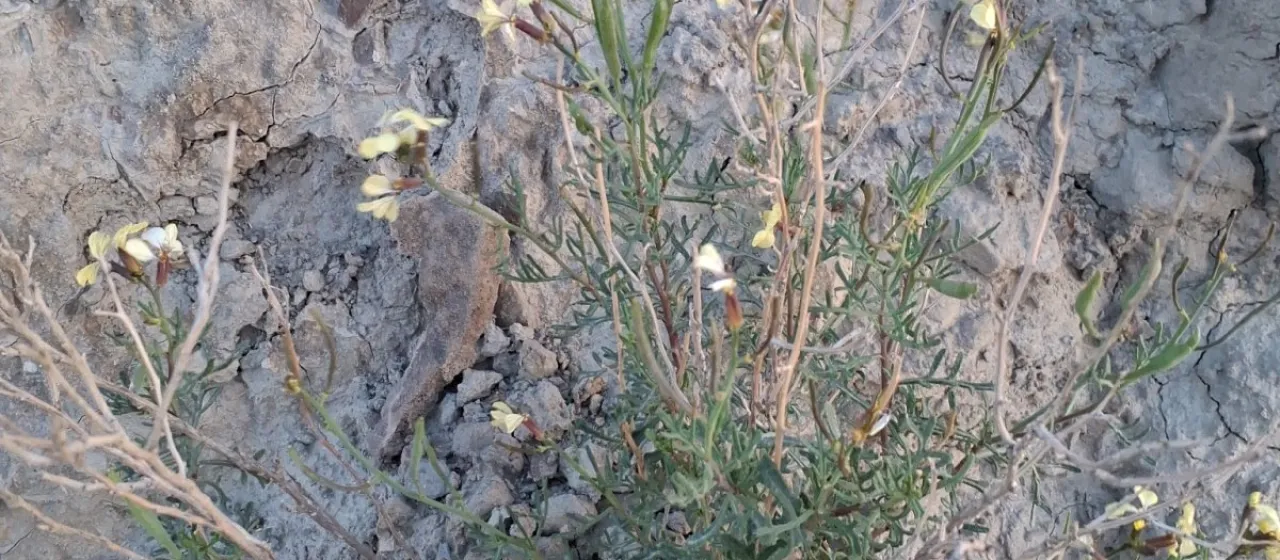
Description
Euzomodendron bourgaeanum is a rare, perennial plant species belonging to the Brassicaceae family. It is a strictly endemic species found only in specific mountainous regions of southeastern Spain, primarily within the province of Almería, where it thrives in challenging, arid environments.
Botanically, it is identified as a small, woody-based subshrub. It has evolved specific morphological traits to survive in rocky limestone cliffs, including small, sclerophyllous leaves that help reduce transpiration rates. The flowering structures are typical of its family, yet the timing is strictly dependent on scarce rainfall events.
Climate and soil requirements for this species are highly demanding. It requires full sun exposure and excessively well-drained, nutrient-poor, alkaline substrates. In a cultivated setting, it is essential to ensure that the roots do not remain damp, as the species is highly susceptible to root rot and fungal infections caused by high humidity.
The agrotechnical approach for this plant involves creating an environment that mimics its natural limestone habitat. Protection from excessive winter moisture is paramount. Standard fertilization techniques used for agricultural crops are unsuitable for this plant, as it has adapted to survive in extreme nutrient deficiencies where excessive nitrogen would be detrimental to its growth cycle.
Economically and scientifically, Euzomodendron bourgaeanum is not a commercial crop but serves as a vital component of local biodiversity. It is primarily studied for its extreme xerophytic adaptations, which provide insights for researchers working on plant stress tolerance. Its conservation status makes it a subject of interest for specialized botanical institutions globally.
- Family: Brassicaceae
- Native Range: Southeast Spain (Almería)
- Growth Habit: Woody subshrub
- Primary Stress Tolerance: Drought, extreme soil pH
- Status: Endangered/Endemic