Description
Silky evolvulus (Evolvulus sericeus) is a herbaceous perennial plant belonging to the Convolvulaceae (Morning Glory) family. Unlike many members of its family, it does not climb but instead develops into low-growing, mat-forming clusters with fine, pubescent stems and leaves that give the plant a distinct silvery-grey appearance.
The native distribution of this species spans tropical and subtropical regions of the Americas, including the southern United States, the Caribbean, and parts of South America. It is typically found in arid habitats, such as sandy plains, open prairies, and coastal dunes, which demonstrates its remarkable adaptation to low-water and nutrient-poor environments.
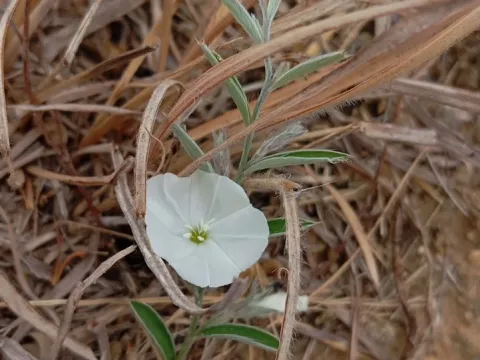
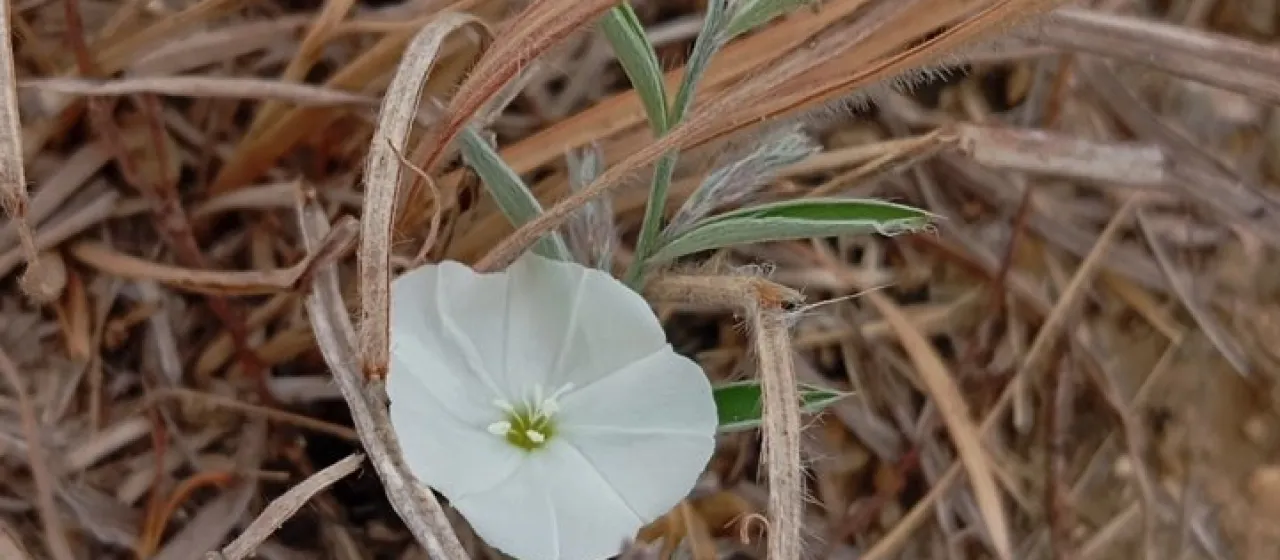
Botanically, the plant is characterized by small, alternate leaves that are densely covered with silky hairs, which help the plant retain moisture by reducing transpiration. The flowers are funnel-shaped, typical for the family, appearing in shades of white or pale blue. A unique biological trait of this plant is that its flowers bloom only under bright sunlight, closing during overcast weather or at night.
Agronomic requirements for successful cultivation include several critical factors:
- Full sun exposure is essential for healthy development and consistent flowering.
- Highly permeable, well-draining soil to prevent root asphyxiation and fungal infections.
- Minimal irrigation, as the plant is extremely tolerant to drought once established.
- Regular pruning to stimulate bushier growth and prevent the centers of the mats from becoming sparse.
In terms of economic and practical use, silky evolvulus is valued as an ornamental groundcover for xeriscaping and rock garden designs. Its ability to thrive in poor soils and hot climates makes it an excellent candidate for water-wise landscaping, especially in urban environments where heat reflection from stone or pavement can be intense.
As for protection, the primary agronomic concern is the management of fungal pathogens, particularly root rot caused by waterlogged soil. In glasshouse or nursery conditions, infestations of spider mites can occur if the humidity is too low. Proper air circulation and controlled watering regimes are the most effective strategies for maintaining healthy, vigorous plant populations.
Photo gallery