
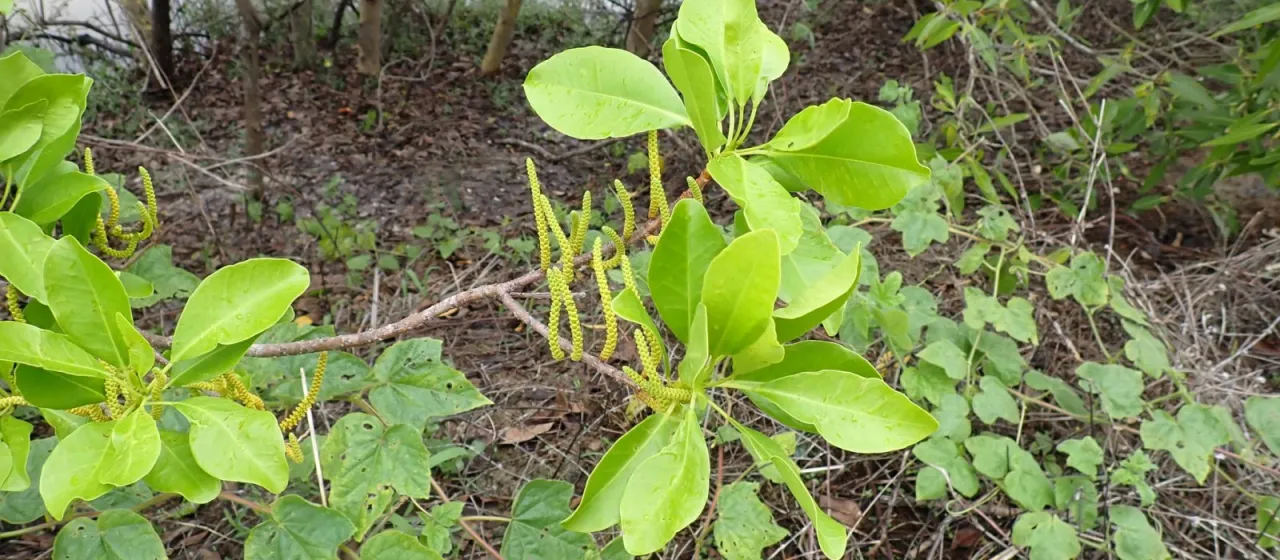
Description
Excoecaria agallocha, belonging to the Euphorbiaceae family, is a distinctive mangrove tree species renowned for its ability to thrive in saline tidal environments. It is often referred to as the blind-your-eye mangrove due to the potent, caustic milky sap it secretes, which can cause significant irritation and temporary blindness upon contact with eyes.
The geographical origin and distribution of this species span the coastal regions of the Indo-Pacific, extending from Southeast Asia to the tropical areas of Australia and the Pacific Islands. It plays a critical role in the coastal ecosystem, stabilizing intertidal mudflats and providing essential habitat for various marine organisms.
Botanically, the species is characterized by its evergreen foliage and spikes of small, unisexual flowers. The leaves often turn a vibrant red shade before they drop. As a succulent-like woody plant, it has evolved specific physiological mechanisms to excrete excess salt through its leaf tissue, allowing it to dominate in highly saline environments where other species fail.
Cultivation and management of Excoecaria agallocha are primarily focused on conservation and reforestation programs. It requires high humidity, consistent tropical temperatures, and regular tidal inundation. Unlike conventional crops, it is not cultivated in traditional agricultural fields, as its biological health is strictly tied to the periodic fluctuations of seawater and the unique nutrient cycle of mangrove soils.
Economically, the tree is valued for its lightweight, soft, and pale-colored wood, which is utilized in various traditional crafts and interior woodworking. Furthermore, secondary metabolites derived from its bark and leaves have been the subject of phytochemical studies for potential pharmaceutical applications, such as anti-inflammatory and antioxidant activities, though its inherent toxicity necessitates rigorous processing.