
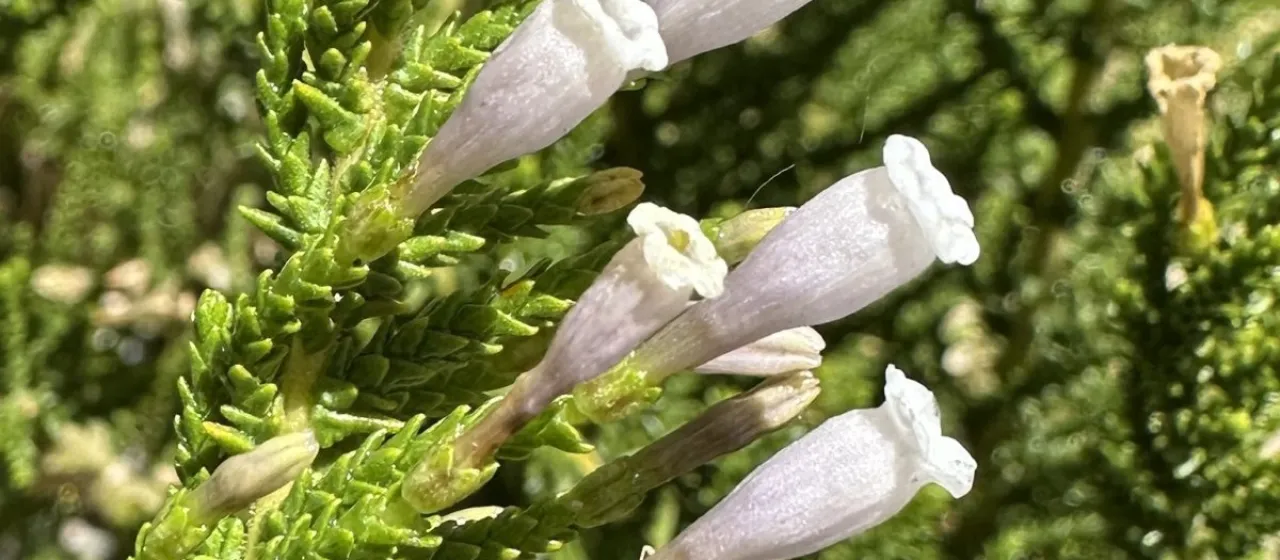
Description
Fabiana imbricata, commonly known as Pichi, is an evergreen shrub belonging to the Solanaceae family. Despite being a member of the nightshade family, it bears a striking resemblance to conifers, as its leaves are tiny, scale-like, and imbricated (overlapping) along the branches. It typically grows as a perennial shrub, reaching heights of 1 to 2 meters in cultivated environments.
Originating from the mountainous regions of South America, particularly in Chile and Argentina, this plant is naturally adapted to rocky, well-drained terrains. Its resilience allows it to thrive in nutrient-poor soils where other shrub species might struggle. In an agricultural context, it is cultivated both for its ornamental appeal and its significant pharmacological value.
Botanically, the plant is characterized by its profuse blooming season, during which it produces numerous small, tubular, white-to-lavender flowers. These flowers are highly attractive to pollinators. The root system is sturdy and efficient, allowing the plant to sustain itself in arid or semi-arid conditions once established. Propagation is most successfully achieved through semi-hardwood cuttings.
The agronomic requirements for Fabiana imbricata focus heavily on drainage; waterlogging is the primary cause of root rot. It thrives in slightly acidic to neutral soil types and prefers locations with full sun exposure. In regions where winter temperatures drop significantly, protective measures are essential, as the species is sensitive to hard frosts. Regular pruning after flowering is recommended to maintain a compact habit.
Host plant utilization is primarily centered on the collection of leaves and young stems for medicinal use. The plant is valued for its diuretic and urinary antiseptic properties, containing specific flavonoids and essential oils. In addition to its medical application, Pichi is a popular choice for rock gardens and xeriscaping projects due to its unique architectural appearance and low maintenance requirements once adapted.
- Ensure excellent drainage to prevent root diseases.
- Requires full sunlight for optimal flower production.
- Sensitive to extreme cold; needs protection in temperate zones.
- Generally resistant to major pests due to its chemical profile.