Fagraea ceilanica
Fagraea ceilanica Thunb.
Description
Fagraea ceilanica is a prominent evergreen shrub or tree belonging to the Gentianaceae family. It is widely recognized for its botanical versatility, often starting its life cycle as an epiphyte upon the branches of larger trees before developing its own robust root system.
Native to tropical Asia, including Sri Lanka, India, and parts of China, this species thrives in humid, warm environments. Its distribution is closely linked to equatorial forests where rainfall is abundant and temperatures remain consistently elevated throughout the year.
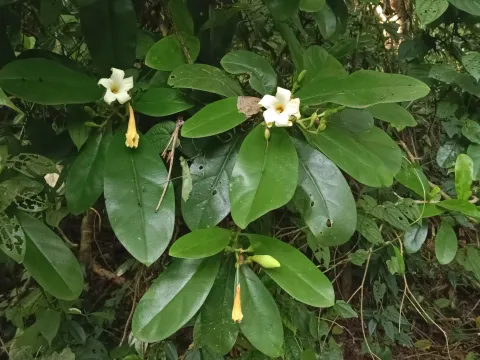
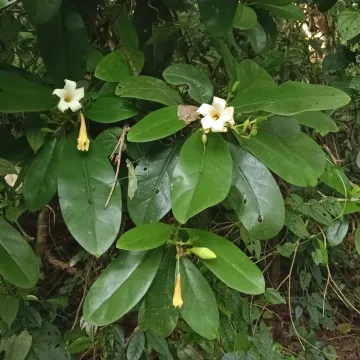
The plant features distinctively thick, glossy, opposite leaves and large, trumpet-shaped flowers that transition from pure white to a deep, creamy yellow. These flowers are highly valued for their intense, pleasant fragrance, which becomes particularly noticeable during the evening hours.
Agricultural and horticultural requirements for Fagraea ceilanica focus on maintaining a high-moisture environment with well-drained, nutrient-rich soil. It thrives in locations with dappled shade or indirect sunlight, making it suitable for protected areas in tropical landscapes where direct scorching sunlight can be avoided.
In terms of plant health, it is generally hardy but requires vigilant monitoring for sap-sucking pests like mealybugs and aphids, particularly in greenhouse or container environments. Proper drainage is the most critical factor for success, as poor soil structure often leads to root rot, which is the most common pathology for this species.
Photo gallery