
Description
Falkia repens is a low-growing perennial herb belonging to the Convolvulaceae family. Unlike many of its twining relatives, this species is recognized for its creeping habit, forming dense, mat-like groundcovers that are highly effective for suppressing weed growth and stabilizing surface soil.
Native to South Africa, the plant naturally inhabits moist areas and coastal regions. Its adaptation to these environments allows it to thrive in temperate climates, where it has gained popularity as a low-maintenance groundcover for gardens and public landscapes, often serving as a functional alternative to traditional turf grass.
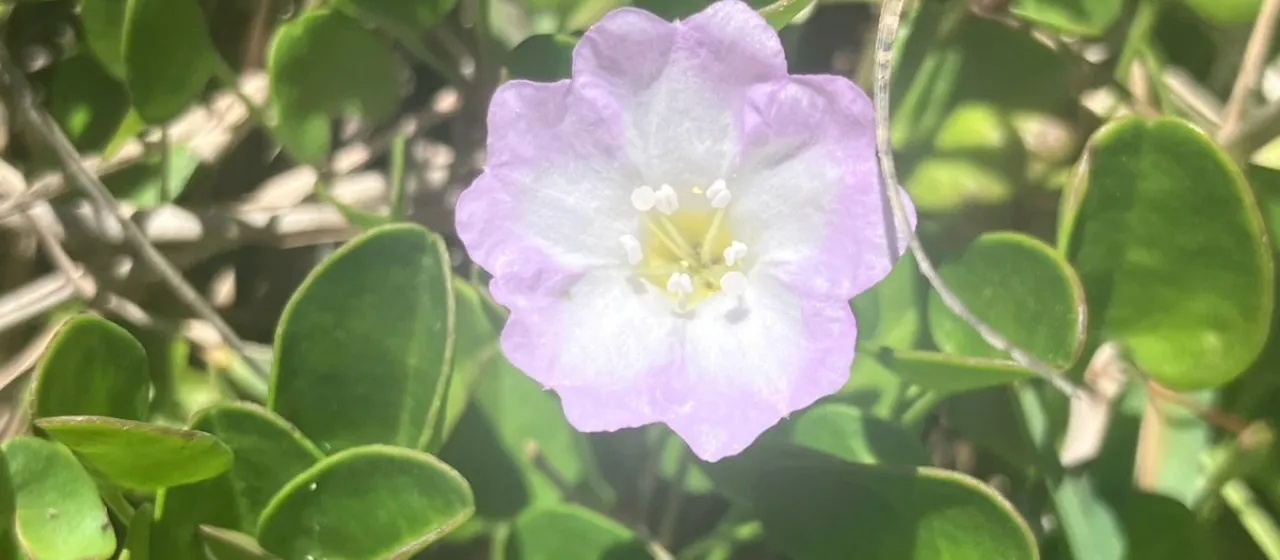
Botanically, the plant is characterized by slender, creeping stems that readily root at the nodes as they spread. The foliage consists of small, bright green, kidney-shaped leaves. During the peak flowering season, the plant produces a profusion of delicate, cup-shaped flowers, which are typically white or pale pink, creating an attractive visual effect against the green carpet.
Cultivation requires well-drained but consistently moist soil to achieve optimal density. While Falkia repens exhibits some resilience, it prefers sunny locations or partial shade to perform best. Essential maintenance practices include regular irrigation during dry spells and ensuring the soil remains fertile. Propagation is predominantly vegetative, achieved through division or stem cuttings, which easily establish in new environments.
The primary horticultural use of this species is in landscaping, specifically for rock gardens, pathway borders, and as a durable ground-covering feature. While it is generally robust, growers should be aware of potential pest pressure from slugs and snails, which can damage the foliage in overly damp conditions. Proper site selection and water management are key to preventing these minor issues and maintaining healthy growth.